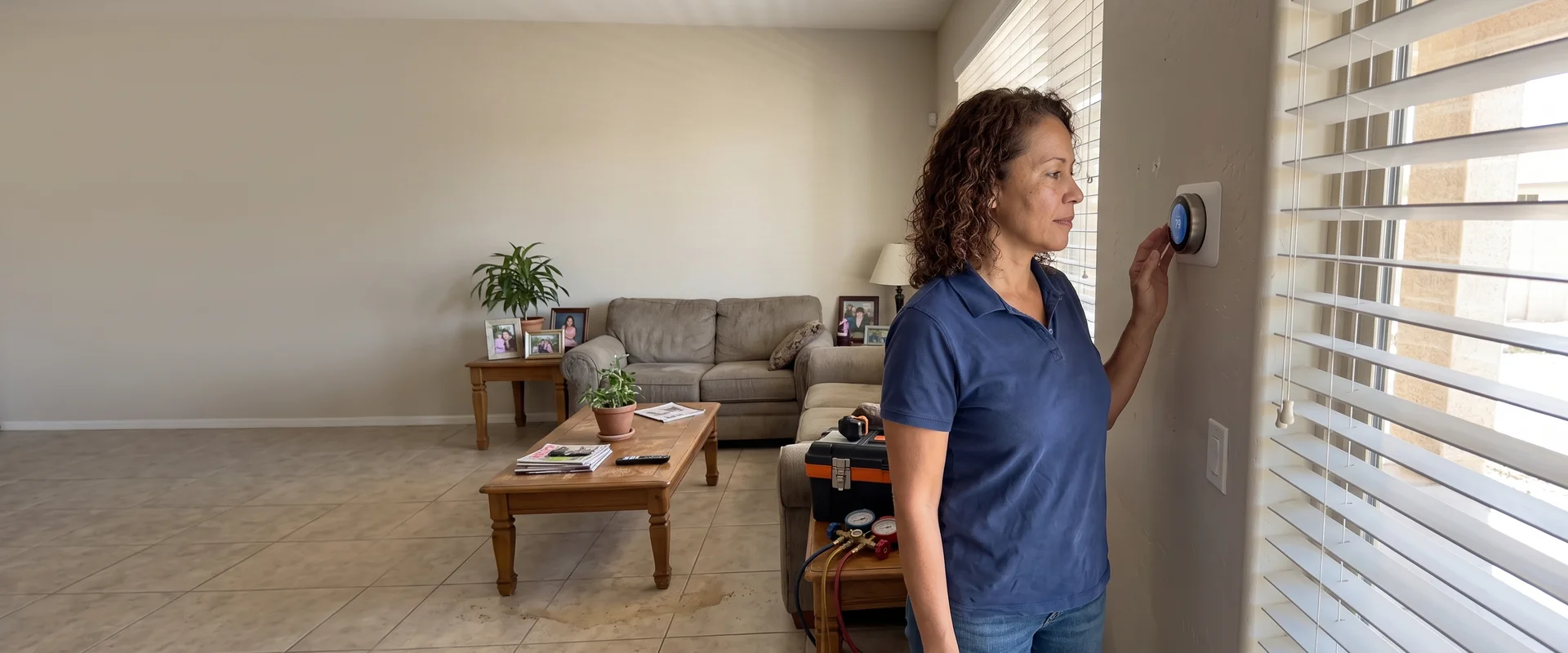
The Part of This Industry We Deleted
Most replacement quotes in this market start the same way: a salesperson in your living room, a tablet, and a size arrived at by rule of thumb. The number moves depending on how the conversation goes, and the equipment recommended is reliably larger than the house needs, because larger pays better and no homeowner ever complains that their house got too cold.
We replaced that entire step with TrueQuote AI. You run a real Manual J load calculation online, see the equipment that actually fits your home at several efficiency tiers, and buy it without anyone knocking on your door. The engineering stayed. The closing script did not.
The results are checkable. One Chandler homeowner came to us after three in-home estimates, all of which recommended a five-ton system for an 1,800 square foot house. The load calculation put the real requirement well under that. The correctly sized system cost around $3,000 less and, more to the point, will dehumidify properly and last longer because it will run in long cycles rather than short bursts.
What a Correctly Sized System Actually Buys You
Sizing is not a detail, it is the decision that determines how the system behaves for the next fifteen years.
- Humidity control. Cooling capacity removes heat. Runtime removes moisture. An oversized system hits setpoint before it has dehumidified, which is why a house can be at 74 degrees and still feel clammy.
- Compressor life. Most wear happens at start-up. Short-cycling multiplies start-ups. A correctly sized system runs longer and starts less.
- Even temperatures. Air has to physically reach the far bedroom. A system that shuts off after eight minutes never gets there.
- Cost. Both the equipment and the electricity. A variable-speed inverter running at 40% output for an hour uses meaningfully less energy than a single-stage unit cycling on and off for the same hour.
Types of System We Install
Single-stage. One capacity, on or off. The lowest cost and still the right answer for many homes, particularly rentals and shorter holding periods.
Two-stage. A high and a low output. Runs on low most of the time, which improves comfort and humidity control noticeably over single-stage without the cost of full inverter equipment.
Variable-speed inverter. Modulates continuously across a wide capacity range. Quietest, most efficient, best humidity control, and genuinely worth it in a climate with an eight-month cooling season. These are AHRI certified and Energy Star rated at the higher tiers and qualify for the strongest rebates.
Heat pump. Cooling and heating from one system. Increasingly the default recommendation in our California service area given the mild heating season and the incentive structure, and worth serious consideration in Arizona too.
GreenTek by Daikin. Our house brand, specified for the Southwest Regional Efficiency Standard and the design temperatures we actually work in rather than a national average. The GreenTek page covers the specification in detail, and why we had Daikin build it tells the story behind it.
Cost Guide: What Drives the Number
| Factor | Effect |
|---|---|
| Correctly sized tonnage | The single biggest lever, and usually downward once a real load calc is run |
| Efficiency tier (SEER2) | Single-stage to variable-speed spans roughly $3,000 to $5,000 |
| Ductwork condition | Static pressure failures require sealing or resizing before new equipment performs |
| Line set and pad | Reused where sound, replaced where not, and we tell you which |
| Electrical | Older panels occasionally need a breaker or disconnect upgrade |
| Title 24 (California) | Duct testing and sealing on changeouts, priced in from the start |
| Utility rebates | Reduce net cost, and eligibility depends on equipment and utility territory |
When Is Replacement the Right Call?
Replacement makes sense when several of these are true at once:
- The system is twelve years or older
- It uses R-410A and needs a significant refrigerant charge or a compressor
- The repair quote is approaching a third of replacement cost
- Cooling has become uneven or the house never quite reaches setpoint in July
- Utility bills have climbed without a rate change explaining it
- It has needed two or more repairs in the last two seasons
If only one of those is true, an AC repair is probably the better economics, and we will say so. If you are genuinely undecided, AC repair vs replacement walks through the same math we use, and what SEER2 rating do I need covers the efficiency question without the marketing.
Installation Day
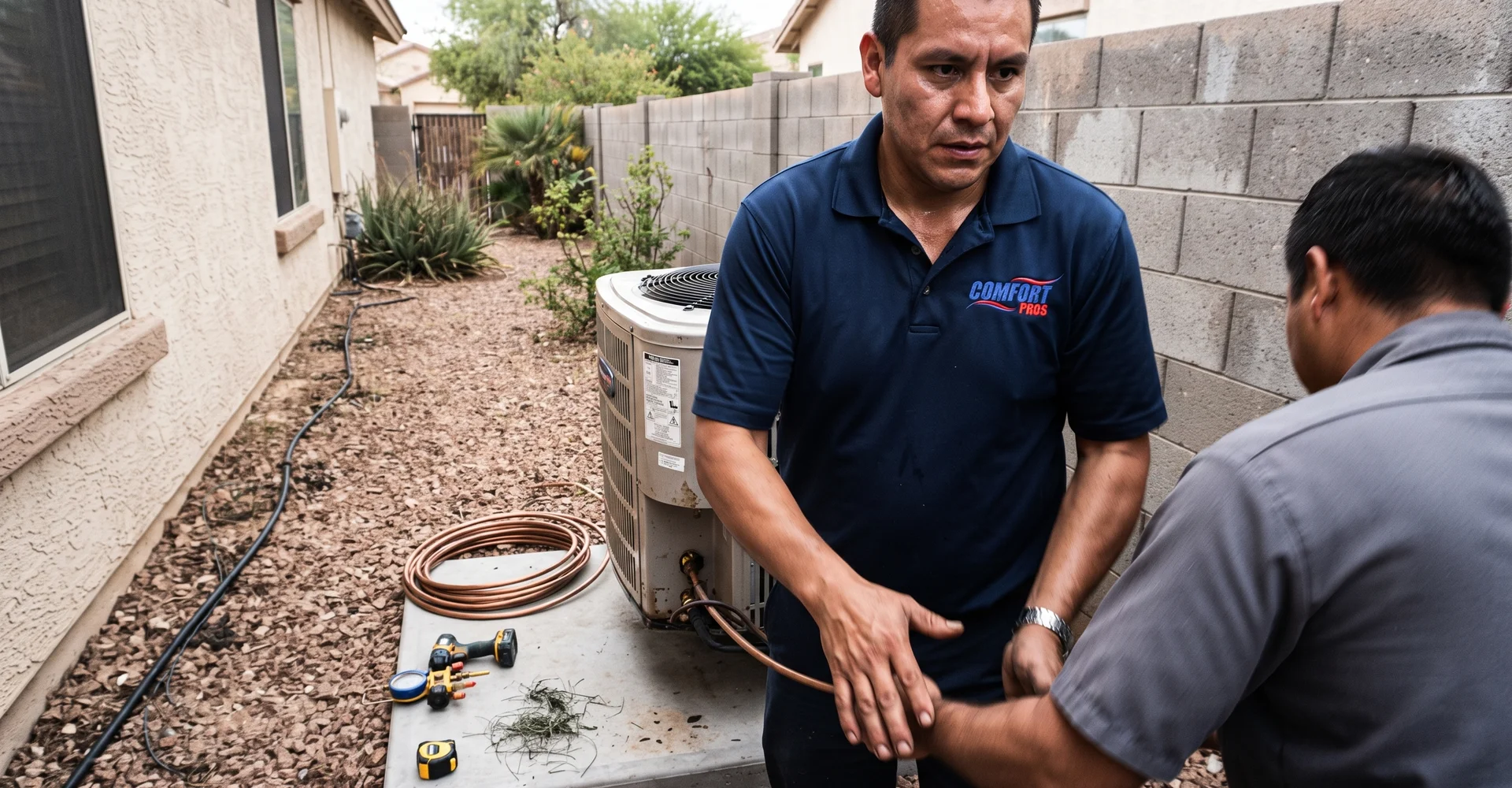
Old equipment out, new pad set level, line set flushed or replaced, brazed connections made under flowing nitrogen so the inside of the pipe stays clean. Then the part that separates a good install from a fast one: a deep vacuum measured on a micron gauge, charge set by subcooling rather than pressure guesswork, static pressure measured, blower speed set to deliver design airflow, and the metering device verified.
We walk you through the readings at the end. You should know what your system was set to do, not just that it was installed.