
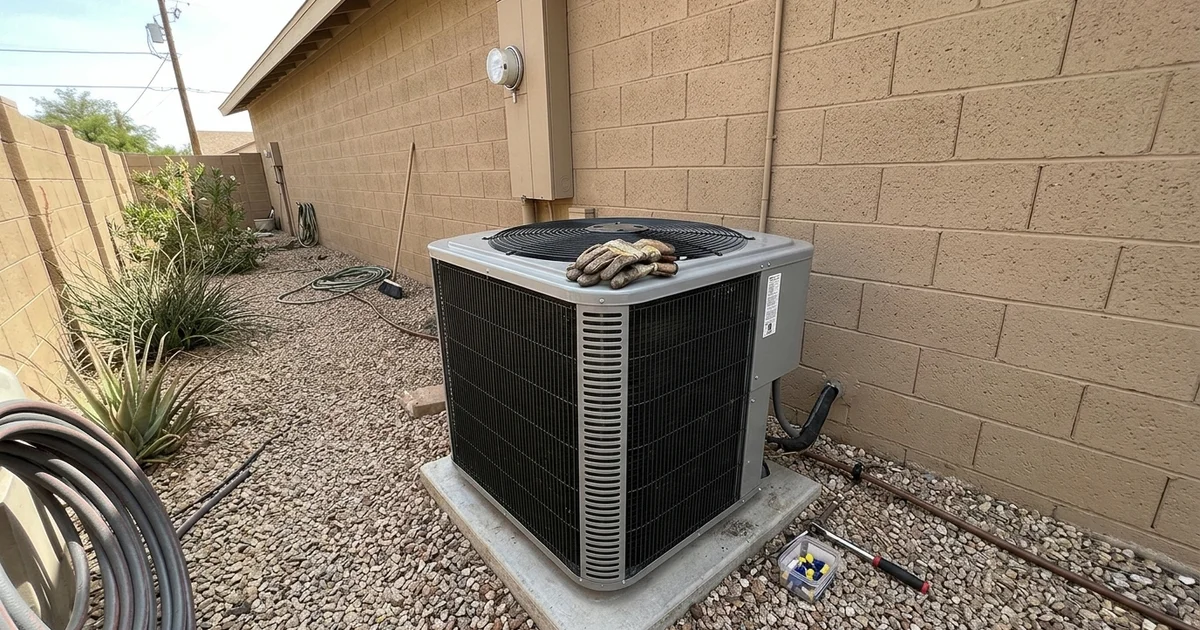
Why This Page Exists
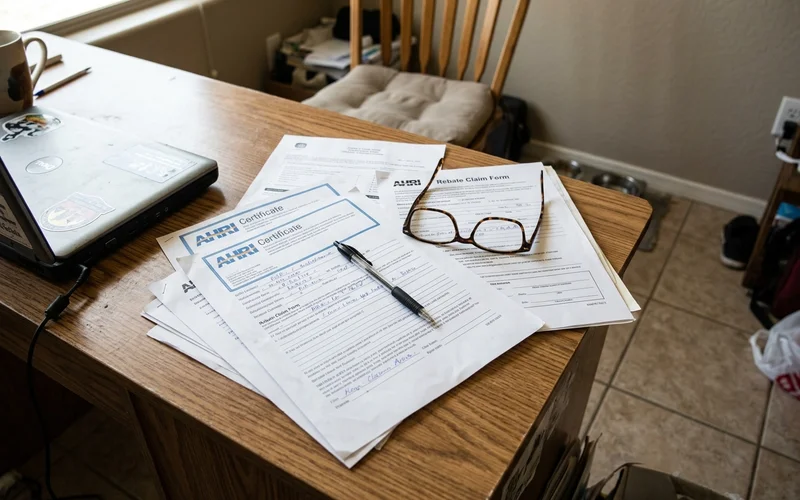
Incentive money is genuinely available and genuinely under-claimed. Homeowners routinely take one rebate and miss two others, or install equipment that misses a qualification threshold by a fraction, or lose a claim because nobody kept the AHRI certificate.
None of that is the homeowner’s fault. The programs are fragmented across state and utility levels - and until the end of 2025, a federal one on top - the qualification rules turn on technical details, and the paperwork is nobody’s idea of a good evening.
So we check eligibility before quoting any AC installation and replacement and provide the documentation as part of the job. What follows is the map.
One caveat worth stating up front: program details change. Treat the structure here as reliable and the specific figures as a starting point to verify with your tax preparer and your utility.
The Federal 25C Credit Has Ended
For years the largest single incentive was the federal 25C Energy Efficient Home Improvement Credit. That ended: under federal legislation passed in mid-2025, the credit terminated for equipment placed in service after December 31, 2025. Equipment installed from 2026 onward does not qualify.
Two things still worth knowing:
- If your system went in during 2025 or earlier and you have not yet claimed the credit, raise it with your tax preparer when you file. You will need the AHRI certificate, the itemised invoice and the installation date - the documentation we provide with every job.
- If federal incentives return, we will update this page and factor them into proposals again. Until then, we do not quote federal credits, and you should be wary of any contractor who still does.
The practical consequence: for a 2026 installation, the incentive math is now entirely a state and utility story - which, in Arizona and California, is still a meaningful one. Pairing a rebate with financing remains the normal way to manage the up-front cost.
Arizona: APS and SRP
Arizona’s two major utilities run separate programs, and which one applies to you depends on your meter, not your city.
| APS | SRP | |
|---|---|---|
| Coverage in our area | Much of Phoenix, parts of the West Valley | Much of the East Valley, Gilbert, Mesa, Tempe, Chandler |
| Program type | Efficiency rebates on qualifying equipment | Efficiency rebates on qualifying equipment |
| Typical qualification | Efficiency tier plus AHRI-matched system | Efficiency tier plus AHRI-matched system |
| Application | Usually contractor-submitted | Usually contractor-submitted |
The boundary between APS and SRP territory does not follow municipal lines cleanly, which is why we check the meter before writing a proposal rather than assuming from the address. Quoting an SRP rebate to an APS customer produces an unpleasant surprise later.
California: TECH Clean California and the Utilities
California is more fragmented and, correspondingly, more rewarding for people who do the work.
TECH Clean California is a statewide initiative specifically supporting heat pump adoption, and it runs alongside rather than instead of utility programs.
Southern California Edison covers much of Pasadena, Simi Valley and large parts of the region.
LADWP covers the City of Los Angeles, and the LADWP versus SCE boundary is one of the more consequential facts about a Los Angeles installation, because the two run different programs.
Glendale Water and Power and Burbank Water and Power are municipal utilities running their own independent programs, which is why the rebate math in Glendale or Burbank differs from a neighbouring city that looks identical on a map.
We check which applies before quoting, for exactly the same reason we check APS versus SRP.
Title 24 is not an incentive, but it is on the same invoice
California replacements commonly trigger Title 24 Part 6 duct testing and sealing. That is a cost rather than a rebate, and any honest California quote includes it from the start.
What Qualification Actually Requires
Three things, and the third catches people out:
- Efficiency tier. The equipment must meet the program’s minimum rating.
- AHRI-certified matched system. The outdoor unit and indoor coil must be certified as a pair. A mismatched system can fail to qualify even when the outdoor unit’s rating looks fine alone.
- Documentation retained. The AHRI certificate, the itemised invoice, the model and serial numbers, and the installation date.
We provide all of the documentation as part of the job. Keep it somewhere you will find it at tax time, because reconstructing it two years later is genuinely difficult.
How to Sequence It
Run the load calculation first, because equipment size determines everything downstream. Then choose an efficiency tier with the incentives factored in, because a rebate can move the effective cost of a higher tier close to a lower one. Then decide how to pay.
AC installation and replacement covers the technical side of that sequence, and TrueQuote AI will price correctly sized equipment across tiers so you can see where the incentives change the answer.