
Licensed Plumbing Across Arizona and Southern California
Flat-rate plumbing across Greater Phoenix (Maricopa County, AZ) and Greater Los Angeles (LA County, CA). Same-day general repairs, water treatment and filtration, emergency plumbing, water heaters, sewer and gas lines, and drain clearing. AZ ROC 364742 · CA C-20 #1040927.
- 15-25 gpg
- Phoenix-area hard water range
- $129-$,500
- Flat-rate repair range
- 47 cities
- Greater Phoenix + Greater LA
- 24 / 7
- Emergency dispatch
Quick Answers About Plumbing Costs, Service, and Slab Leaks
The questions we get most often on the phone, answered in plain language. Comfort Pros is a licensed plumbing and HVAC contractor in Arizona (ROC 364742) and California (C-20 #1040927), serving Greater Phoenix and Greater Los Angeles since 2010.
- How much does a plumber cost in Phoenix or Los Angeles with Comfort Pros?
- Flat-rate, quoted before work begins, with parts and labor in one number. Common plumbing visits in our service area run $129 to $385 for a faucet or fixture repair, $185 to $650 for toilet rebuild and replacement, $245 to $1,450 for disposal and supply line installs, $149 to $850 for an emergency call-out, $850 to $3,500 for a slab leak detection and repair, $3,500 to $8,500 for a whole-home repipe, and $295 to $950 for drain clearing through hydro jetting. The number on the quote is the number on the invoice - no hourly meter, no emergency premium, no "discovered extras" after the work has started.
- Does Comfort Pros do plumbing in Arizona and California?
- Yes. Comfort Pros is a licensed plumbing and HVAC contractor serving Greater Phoenix (Maricopa and Pinal Counties, AZ) and Greater Los Angeles (Los Angeles and Ventura Counties, CA) since 2010. We hold Arizona Registrar of Contractors license ROC 364742 and California Contractors State License Board license C-20 #1040927, and we are fully insured in both states. Plumbing and HVAC run on the same dispatch board so a plumbing emergency does not queue behind cooling calls.
- Can Comfort Pros come out the same day for a plumbing problem?
- Same-day dispatch is standard across our service area. For emergencies (burst pipe, slab leak, sewer backup, total water loss) we prioritize households with infants, elderly residents, and anyone on medication that affects thermoregulation. Buckeye, Gold Canyon, Santa Monica, Simi Valley and Palmdale are at the edge of our coverage and may be next-day during peak demand; call and we will tell you honestly what is possible today.
- How do you find a slab leak without breaking the floor?
- Two methods, usually run together. Acoustic detection uses ground microphones to listen for the hiss of pressurized water escaping through concrete - precise once ambient noise is controlled. Thermal imaging picks up the heat signature a hot-water leak creates across a slab. Individual line isolation and pressure testing confirms which circuit is failing. Only after we know where the leak is do we open concrete, and then only a small area. The alternative approach (open the floor and search) is what produces the horror stories - and it costs thousands in unnecessary demolition.
- Why does my drain keep clogging after it has been snaked?
- Because snaking punches a hole through a blockage rather than removing it. A cable snake bores an opening through grease or root mass and the water starts moving again - but the pipe is still lined with the same material, and it closes back up on its own schedule. If the same drain clogs repeatedly the cause is usually roots, grease or internal scale, and a camera inspection tells us which. Hydro jetting scours the full pipe diameter back to bare pipe; snaking does not. We tell homeowners honestly when snaking is the cheaper right answer - usually on a first-time blockage - and when it is just a way to be back in three months.
- Do you charge extra for emergency plumbing calls or weekends?
- No. The flat rate is quoted before work begins and it does not change because of the day or the hour. The fear with emergency plumbing is almost always the invoice rather than the leak, and pricing that shifts with urgency is a large part of why. We settle the number first and remove that from the conversation.
- What should I do while I wait for the plumber?
- Close the main water shutoff. In most Arizona homes it is on an exterior wall near the front hose bib, or in a meter box near the curb. In older California homes it is frequently in a basement, a crawlspace access, or at the meter. If you cannot find it, call us and we will talk you through it while a truck is dispatched. Once the water is off, if there is standing water near outlets or an electrical panel, turn off power to that area at the breaker before walking through it. Move what you can off the floor, and photograph everything before cleanup because an insurance adjuster will want to see the damage as it was. If the problem is a sewer backup rather than a supply leak, stop using every drain and fixture in the house, including toilets and the washing machine.
- Do you replace water heaters the same day?
- Usually. We keep common Bradford White tank sizes (40 and 50 gallon) stocked for same-day swaps, and we carry the parts for the failures that do not need a whole tank: thermocouples, pilot assemblies, elements, gas control valves, dip tubes, T&P valves, and anode rods. Tankless conversions and installations requiring gas line or venting work are scheduled rather than same-day, because the scope genuinely requires it - not because we are dragging the visit out.
- Can you handle gas line work and permits?
- Yes - repair, replacement, and new installation, with leak testing and gas safety verification. Permits are handled in both Arizona and California as part of the job rather than left to you. We size the gas line against the BTU demand of the appliance it is feeding (especially on tankless water heater installs), pressure test the system at 10 PSI for 15 minutes, and document the safety verification.
- Why are slab leaks so common in Mesa and the East Valley?
- It is the housing generation, not bad luck. Mesa carries a large stock of 1970s and 1980s slab-on-grade homes plumbed with galvanized supply lines and early soft copper run under the concrete. Both develop pinhole failures with age. Hard water at 15 to 25 grains per gallon accelerates it. Add decades of thermal cycling on the hot line and small movements in expansive soil, and you get a documented failure frequency in that specific housing generation. The same pattern shows up in pre-1960 Burbank and Pasadena housing with original galvanized supply reaching end of life.
- How do I know whether to repair or replace a water heater?
- Three signals decide it. Age: a tank more than 10 years old in Phoenix hard water is past median service life. Tank condition: visible leaks from a seam or fitting mean the steel has failed and no repair holds. Repair cost against replacement: a four-year-old tank with a failed element is a repair; a twelve-year-old tank weeping at the seam is not. We diagnose the actual fault first, give you the numbers for both paths, and let you pick. Common failure parts ride on every truck so most repairs finish in a single visit.
- Will my insurance cover a slab leak or burst pipe?
- It varies by policy, but commonly the resulting water damage is covered while the failed pipe itself is not. Documentation matters a great deal to that outcome, which is why we photograph the failure, record findings, and provide a clear scope description as standard. Do not clean up before photographing, and notify your insurer early rather than after the repair. If the leak ran long enough that flooring, drywall or subfloor are soaked, the next call after the plumbing repair is damage restoration - extraction, structural dryout, and mold prevention within the first 24 to 48 hours.
Nobody Should Quote a Pipe They Have Not Looked Inside
Plumbing in our two service areas has recognisable failure patterns. Maricopa County water runs 15 to 25 grains per gallon, which destroys water heaters years early and scales tankless heat exchangers. Mesa's 1970s and 80s slab-on-grade housing produces a documented slab leak frequency. Central Phoenix and older Los Angeles neighborhoods carry cast iron laterals that scale from the inside, plus clay lines taking root intrusion at every joint under mature street trees.
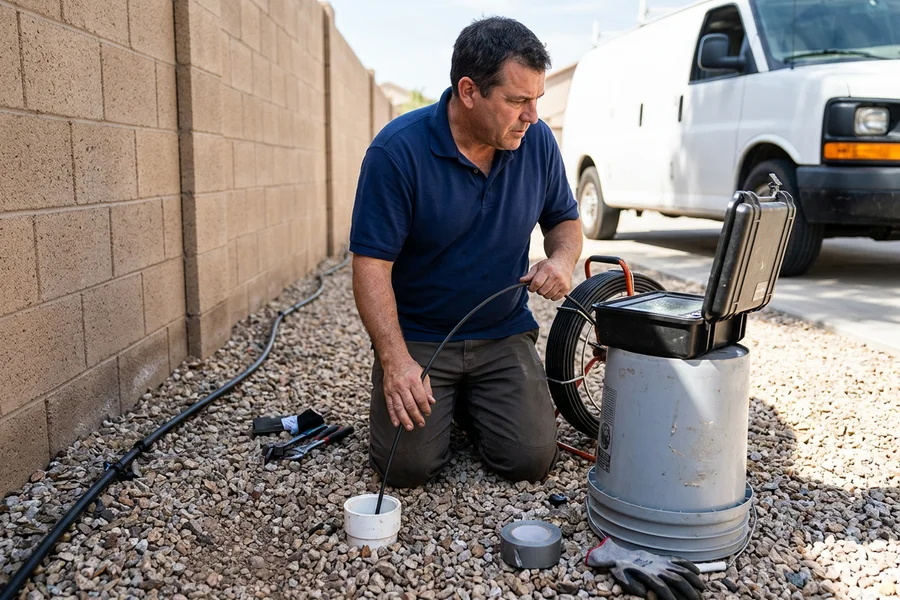
The through-line is diagnosis. We camera sewer lines before quoting, locate slab leaks acoustically before opening concrete, and tell you when snaking is genuinely the cheaper right answer instead of selling a jetting job you do not need.
All Six Plumbing Services
General repairs, water treatment and filtration, emergencies, water heaters, sewer and gas lines, and drain clearing with hydro jetting.
 Same-Day Quotes
Water Treatment & Filtration
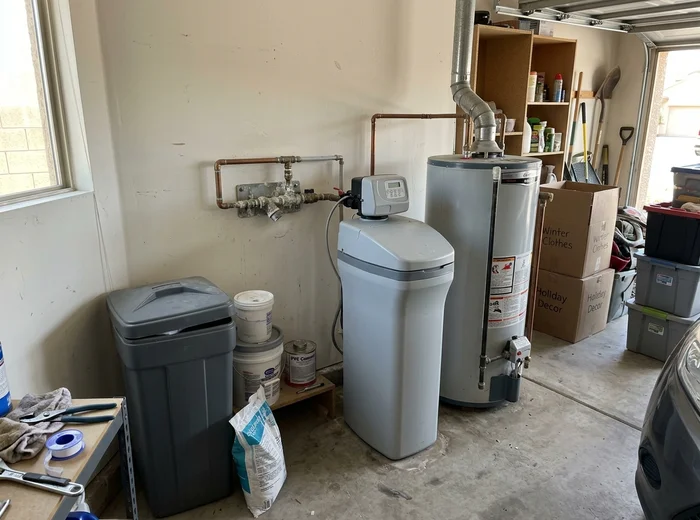
Whole-house filtration, salt water softeners, salt-free conditioners, reverse osmosis and reverse osmosis with remineralization across Gilbert, Greater Phoenix and Greater LA.
Same-Day General Plumbing Repairs
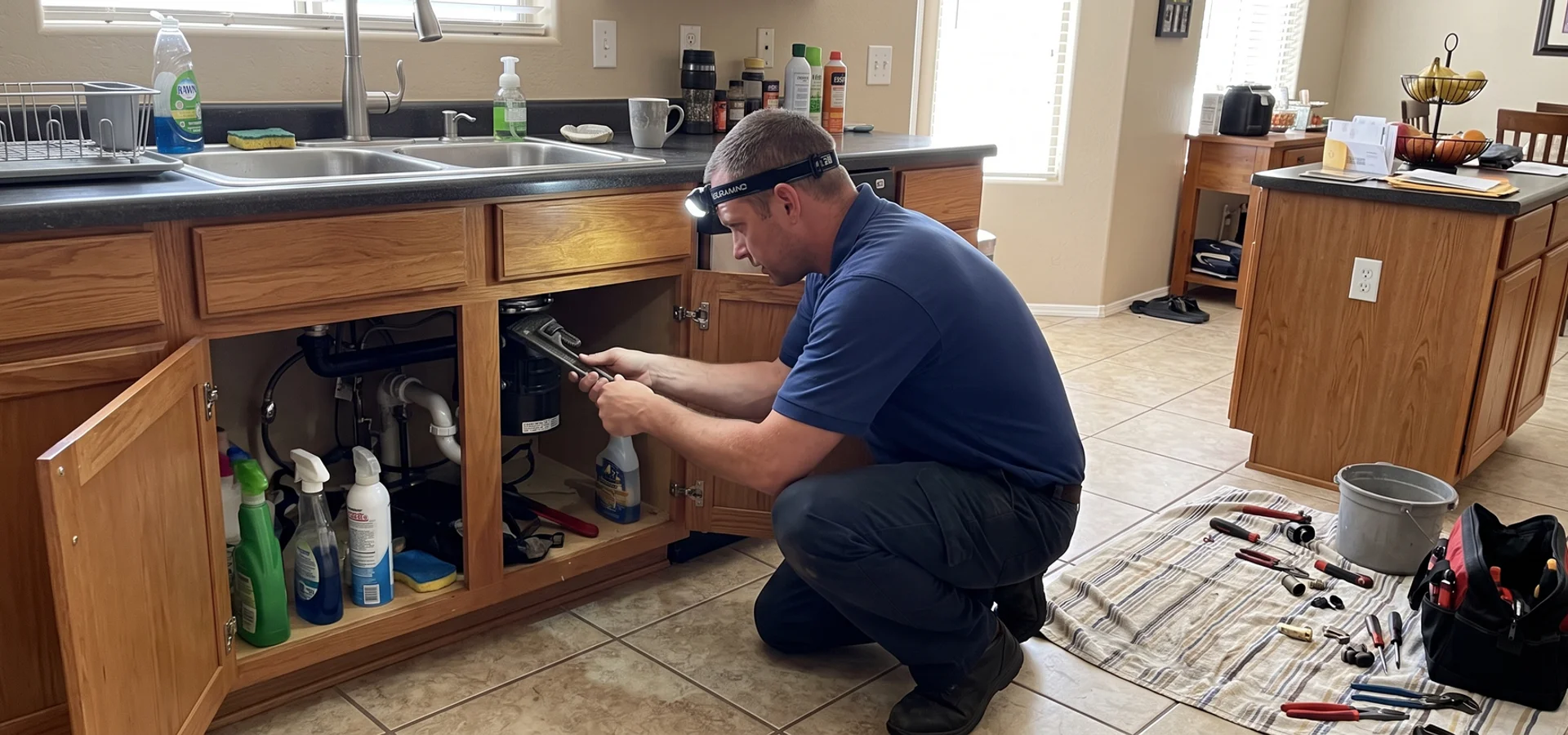
Faucet, toilet, fixture, supply line and disposal repair across Gilbert, Greater Phoenix and Greater LA. Flat-rate by job, same-day availability.
 Same-Day Dispatch
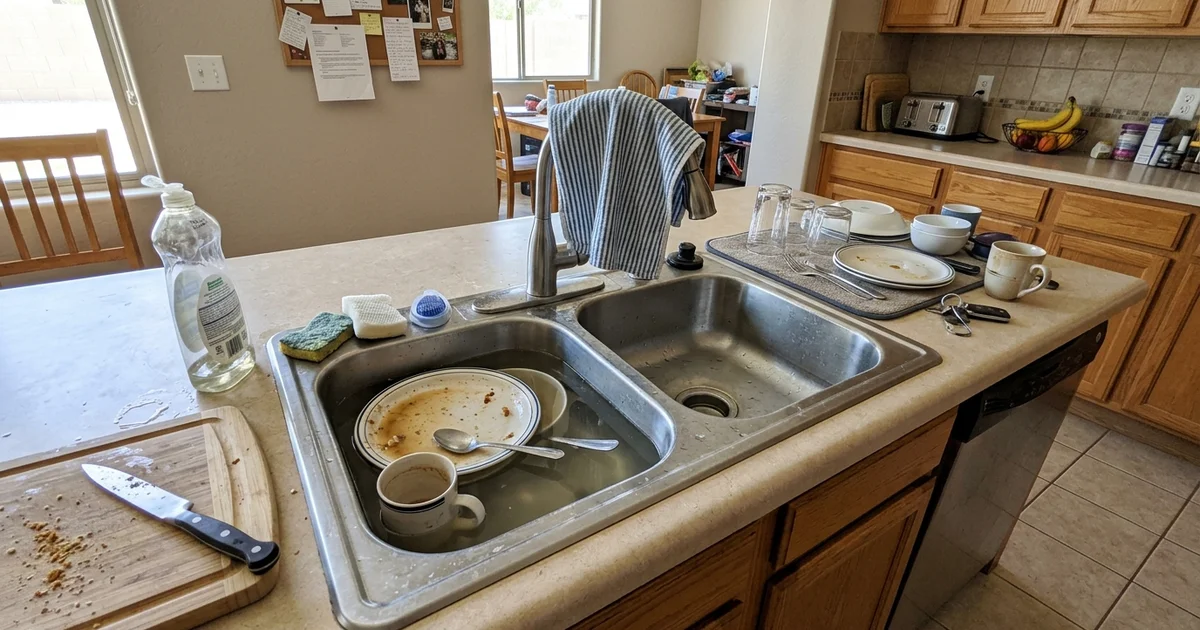
Emergency Plumbing
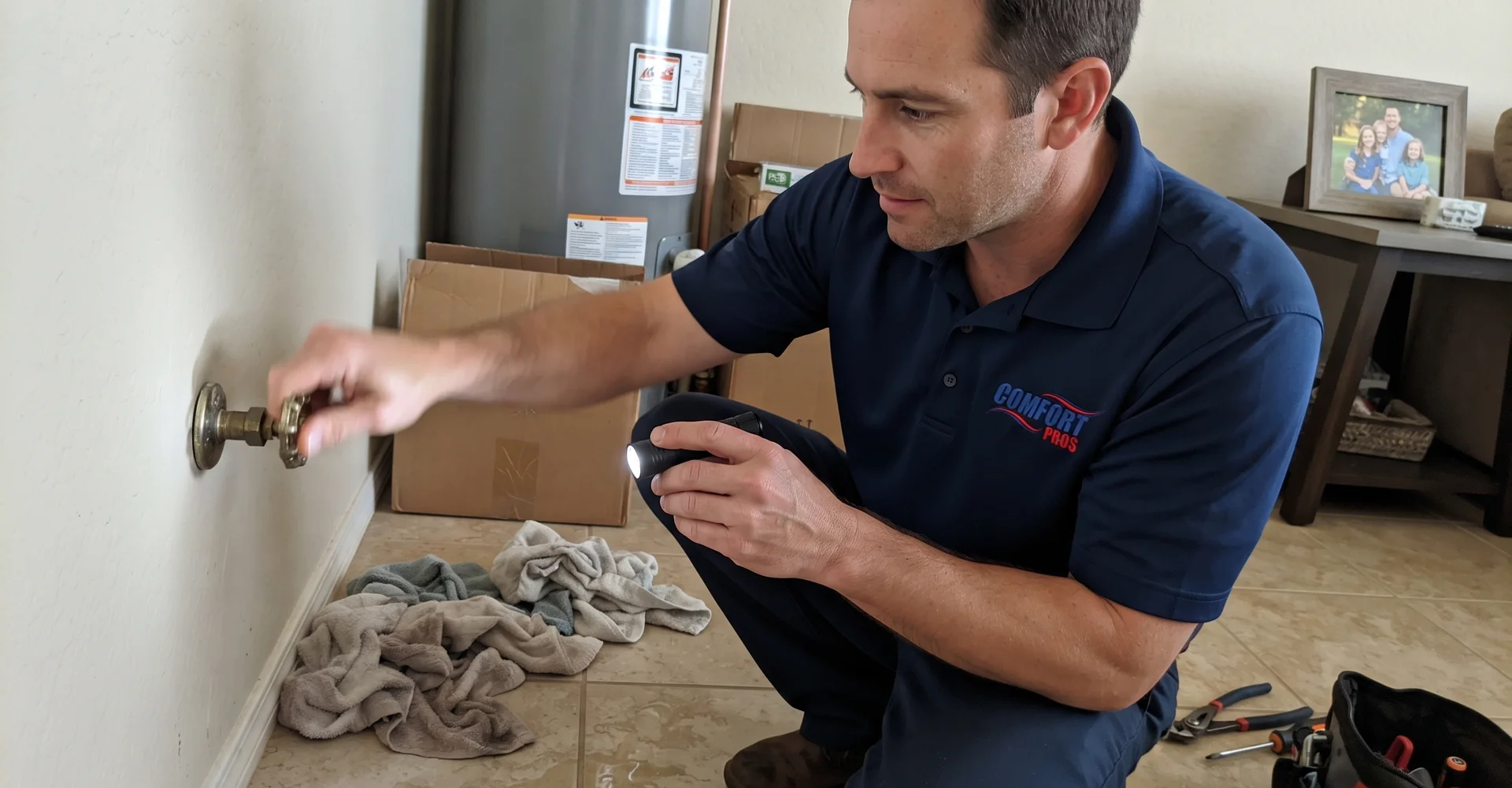
Same-day emergency plumbing for burst pipes, slab leaks, sewer backups and total water loss.
 24/7 Dispatch
Damage Restoration
24/7 emergency water cleanup, structural dryout, mold remediation, animal damage cleanup and biohazard response through vetted, verified partner contractors in AZ and CA.
 Same-Day Swaps
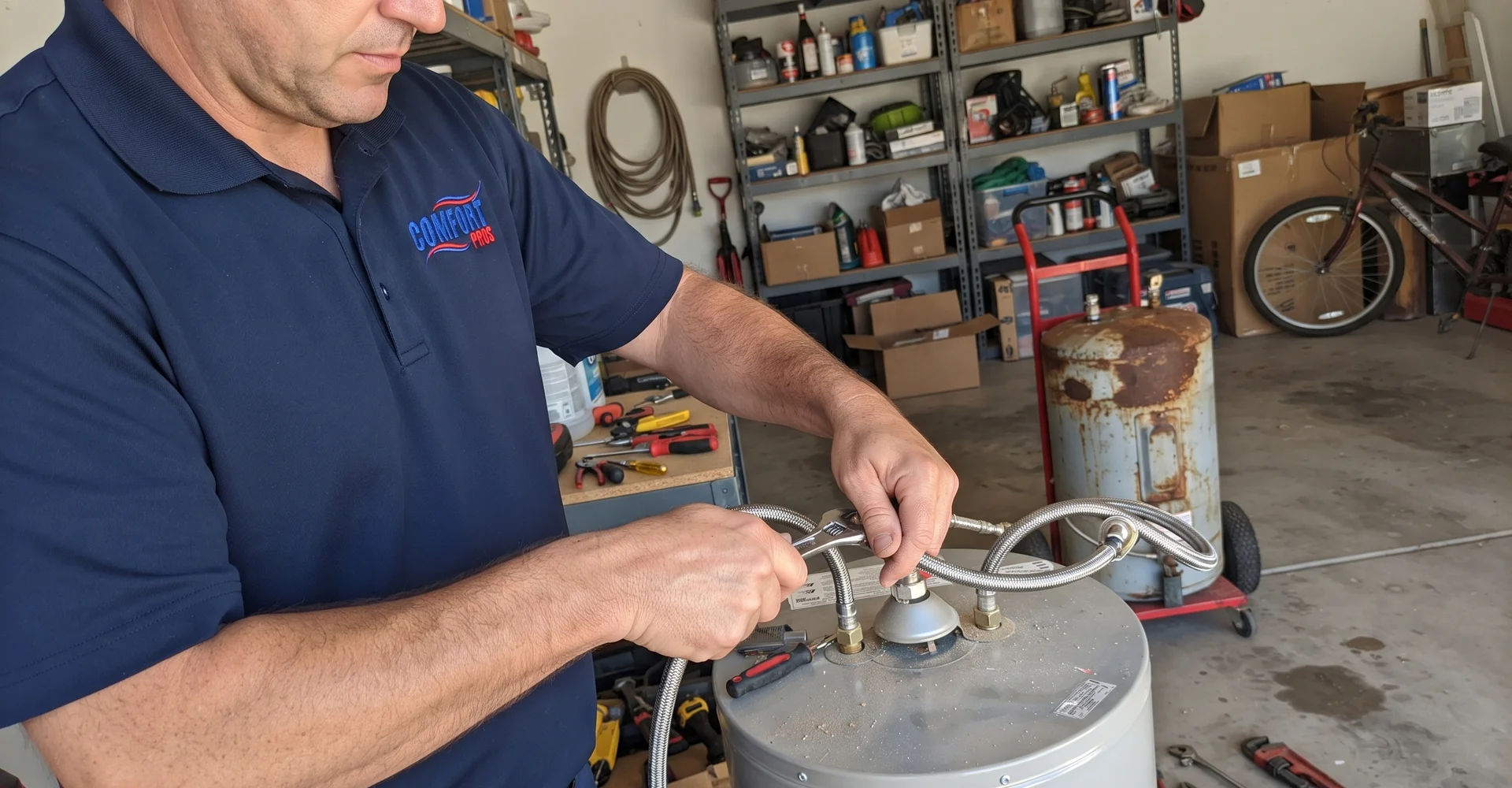
Water Heater Services
Tank and tankless water heater repair, replacement and maintenance built around hard-water realities.
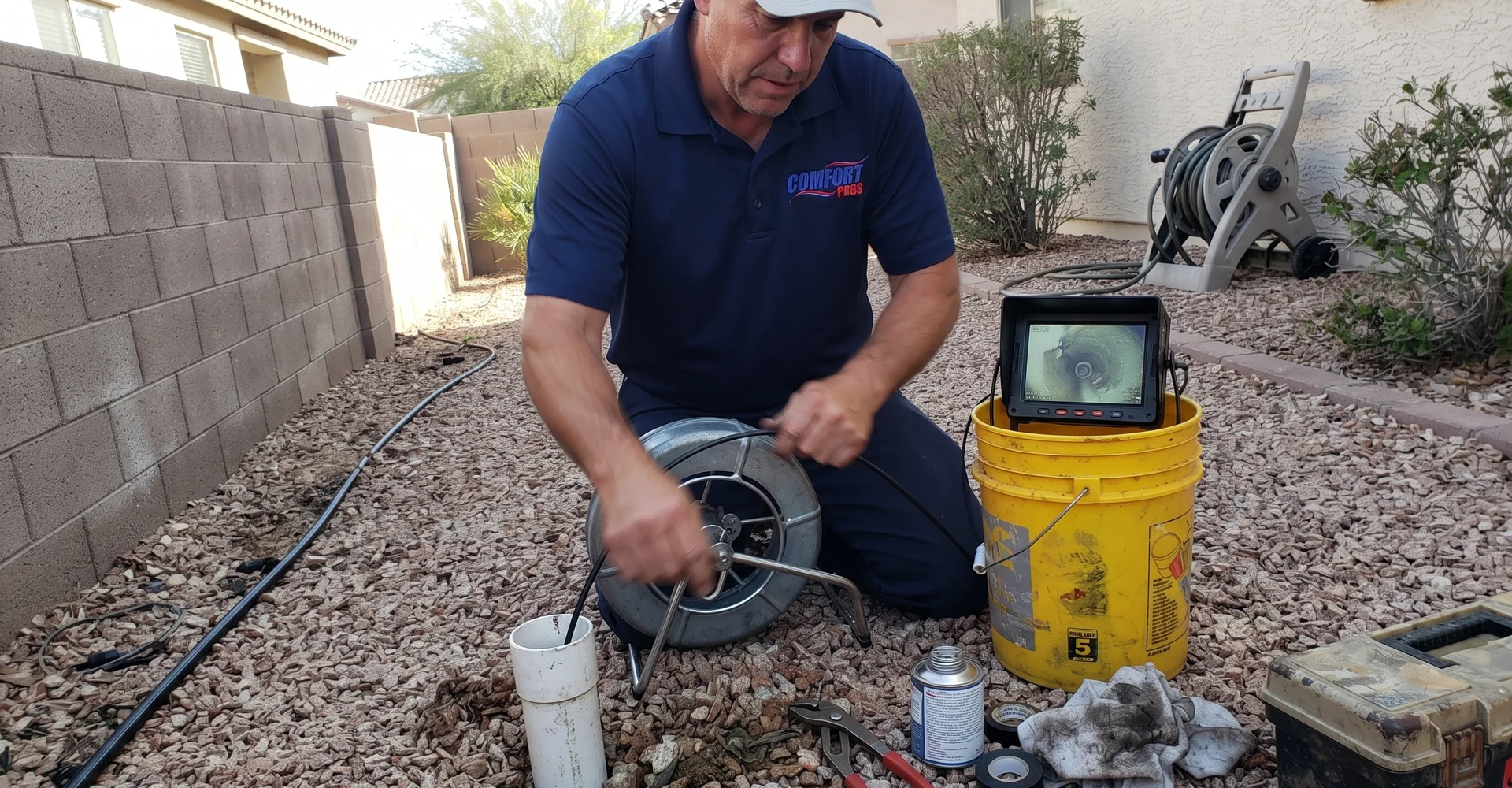
Sewer & Gas Line Services
Sewer repair and replacement, camera diagnostics, trenchless lining, and gas line repair and installation.
 Same-Day
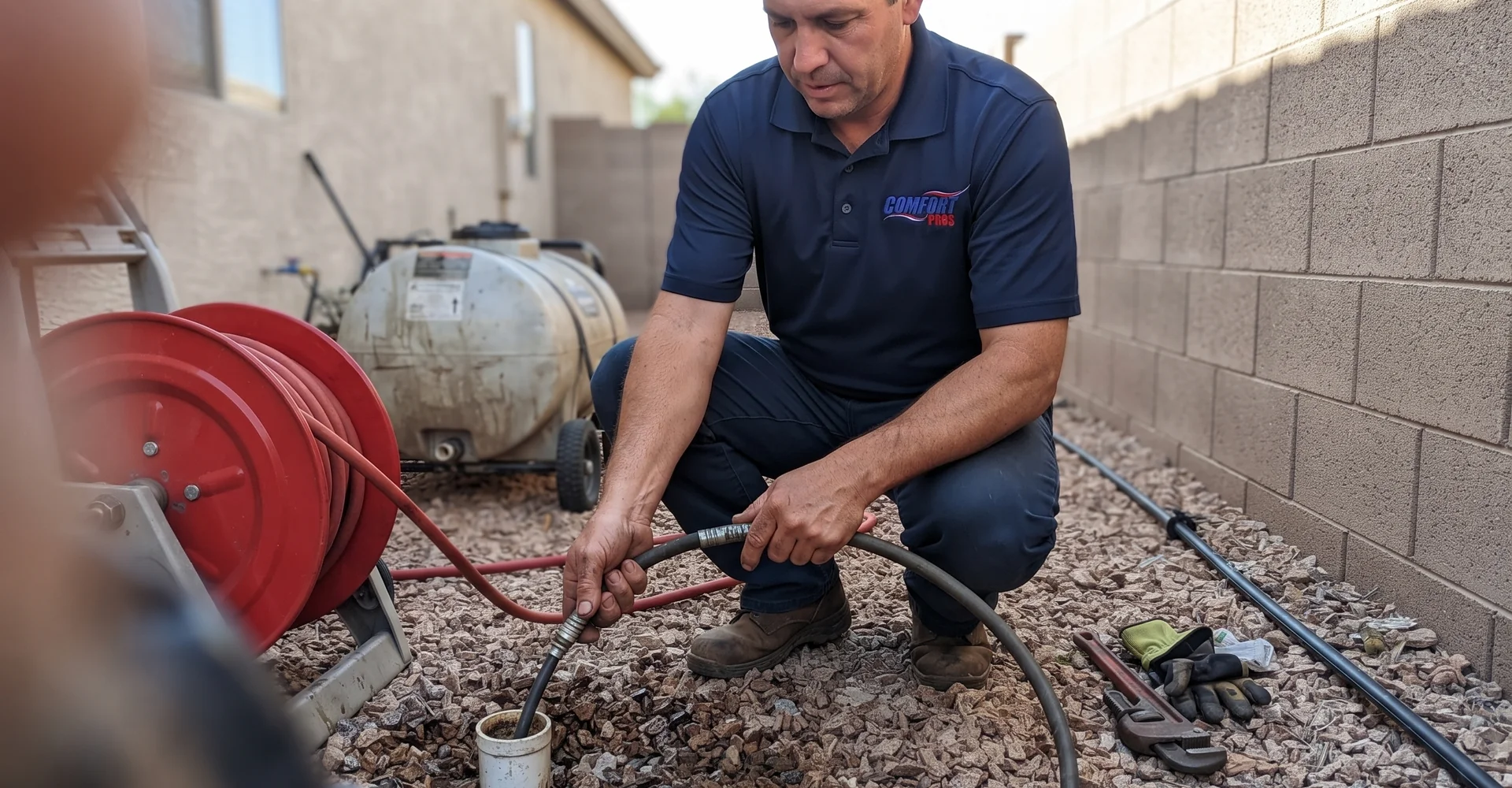
Drain Cleaning & Hydro Jetting
Drain cleaning and high-pressure hydro jetting for kitchen, bath, laundry and main lines.
Plumbing Terms, Defined the Way We Use Them
The vocabulary we use on every job site, in plain language. These are the words and phrases that come up most often on plumbing calls in the Phoenix and Los Angeles metros.
- Slab Leak
- A leak in a water supply line or drain line running under a concrete slab foundation. In Phoenix-area slab-on-grade housing from the 1970s and 1980s, slab leaks are most commonly pinhole failures in original soft copper or galvanized supply lines caused by hard water and decades of thermal cycling. Slab leaks are located with acoustic and thermal detection before any concrete opens.
- PEX-A
- Cross-linked polyethylene, the flexible supply piping we use for whole-home repipes and slab leak reroutes. PEX-A is flexible, has fewer joints than copper, resists the scale and corrosion that Phoenix and Los Angeles hard water inflicts, and can usually be routed with less wall opening - reducing drywall and finish work cost. We install PEX-A expansion piping or Type L copper depending on the home.
- Hydro Jetting
- High-pressure water scouring of a drain or sewer line, typically 4,000 PSI at 18 GPM. A jetter nozzle pulls itself through the pipe on a hose, scouring the full diameter back to bare pipe rather than punching a hole through the center the way a cable snake does. Effective on grease, soft scale, and root intrusion. We assess pipe material and condition before jetting - high-pressure water in brittle cast iron or Orangeburg can turn a clog into an excavation.
- Hard Water
- Water with elevated calcium and magnesium, measured in grains per gallon (gpg). Anything above 7 gpg is considered hard; above 10 gpg is very hard. Municipal supply in Maricopa County, AZ runs 15 to 25 gpg - well into the range where water heaters fail early, tankless heat exchangers scale, and faucet cartridges wear against a scaled seat. Hard water is the single most common cause of premature plumbing equipment failure in our service area.
- Acoustic Leak Detection
- A non-invasive slab leak location method using ground microphones and headphones to listen for the hiss of pressurized water escaping from a pipe under concrete. The signal is unmistakable once you have heard it - high-frequency, louder as the probe approaches the break, softer as it moves away. Acoustic detection finds the leak inside a 12-inch radius in most cases, which means one hole instead of three when the concrete opens.
- Pressure Regulating Valve (PRV)
- A valve on the main water line that drops incoming municipal pressure to a safe level for household plumbing, typically 50 to 80 PSI. When a PRV fails, incoming pressure passes through unreduced, and that stresses every fixture, connection, and appliance in the house. Symptoms are indirect: running toilets, weeping connections, water hammer, water heaters failing years early. Common on hillside properties in the Crescenta Valley, Glendale, and the Verdugo foothills where elevation drives incoming pressure higher.
- Cured-in-Place Pipe (CIPP) Lining
- A trenchless sewer repair method. A resin-saturated felt tube is inverted into the host pipe through the existing cleanout using water pressure, then cured in place to form a new pipe inside the old one. CIPP seals every joint from the inside, so roots cannot re-enter joints that no longer exist. It is appropriate where the host pipe is largely intact - the liner bridges small gaps but cannot bridge a fully collapsed section. We confirm by camera before recommending.
- Sacrificial Anode Rod
- A magnesium or aluminum rod suspended inside a water heater tank, designed to corrode preferentially so the steel tank does not. That is the entire mechanism protecting the tank from internal corrosion. In Phoenix hard water, an anode rod is consumed years faster than in soft water, and once it is gone the tank itself starts corroding. Replacing an anode rod costs a fraction of a new water heater and can add years of life - a part almost nobody is told about.
- Water Hammer
- The shock wave that travels through a pipe when flowing water is forced to stop or change direction suddenly. Closes a faucet quickly and the column of water decelerates from full flow to zero in a fraction of a second; the momentum becomes a pressure spike that travels back through the pipe. Causes banging from inside walls. Common causes are pressure over 80 PSI, no expansion tank on a closed system, and quick-closing valves on washing machines and dishwashers without arrestors.
- T&P Valve (Temperature and Pressure Relief Valve)
- A safety device on a water heater that discharges when internal pressure or temperature exceeds a safe threshold. Required by code on every water heater. Must be tested annually: lift the lever briefly and confirm the valve discharges and snaps shut. A T&P that fails open leaks and must be replaced; a T&P that fails closed means the tank has no pressure relief, which is a safety hazard.
- Flat-Rate Pricing
- A single price covering parts and labor, quoted in writing before work starts. The number on the quote is the number on the invoice. Comfort Pros uses flat-rate pricing on every plumbing and HVAC job because the alternative - an hourly meter - shifts risk from the contractor to the homeowner and rewards slow work. If scope changes because we find something additional, we stop and re-quote rather than adding it silently.
- ROC License (Arizona Registrar of Contractors)
- The state license required for residential contracting work in Arizona. Comfort Pros holds ROC 364742 with the Specialty Dual CR-39 classification for Air Conditioning and Refrigeration. The license number is on every quote and every truck, and can be verified through the Arizona Registrar of Contractors before any work begins.
- CSLB License (California State License Board)
- The state license required for contracting work in California. Comfort Pros holds C-20 License #1040927 (Warm-Air Heating, Ventilating and Air-Conditioning), covering both HVAC and plumbing work in California. Verifiable through the California Contractors State License Board.
What Plumbing Customers Say
Plumbing Questions We Get Weekly
Do you charge extra for emergency plumbing calls?
How do you find a slab leak without breaking concrete?
Why does my drain keep clogging after it has been snaked?
Can you handle gas line work and permits?
Do you replace water heaters the same day?
Is your plumbing team licensed separately from the HVAC side?
How much does a slab leak repair cost in Phoenix?
What is a whole-home repipe and when do I need one?
Do you offer financing on larger plumbing jobs?
Still have a question?
Call the team in your state and talk to someone who actually works on these systems.
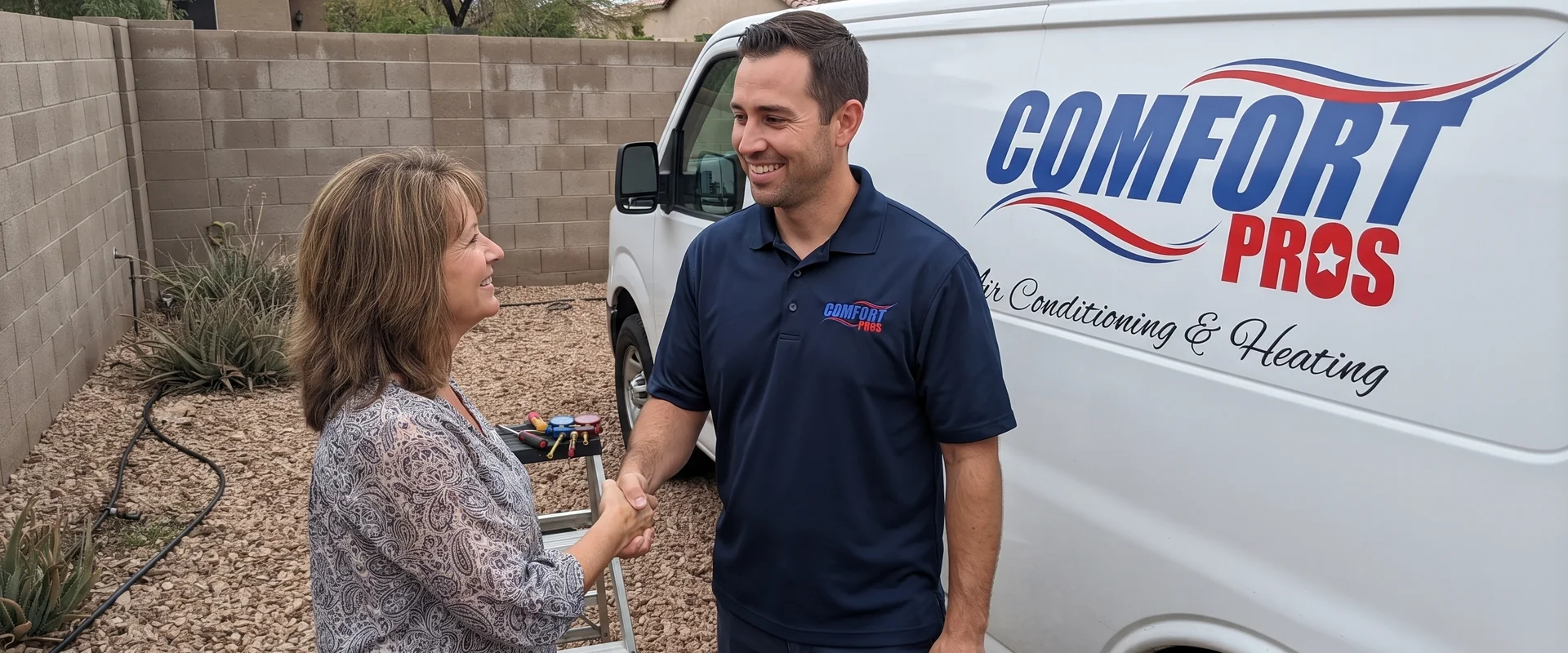
Water Where It Should Not Be?
Call and we will talk you through shutting off the supply while a truck is dispatched. Flat-rate pricing quoted before anyone starts cutting.
California team: (818) 690-7951 · Text us: (818) 489-2826