The Specific Problem Mini Splits Solve
Mini splits are not a general-purpose replacement for central air. They solve a particular problem: conditioning a space that your ductwork never reached, or a whole house that never had ducts to begin with.
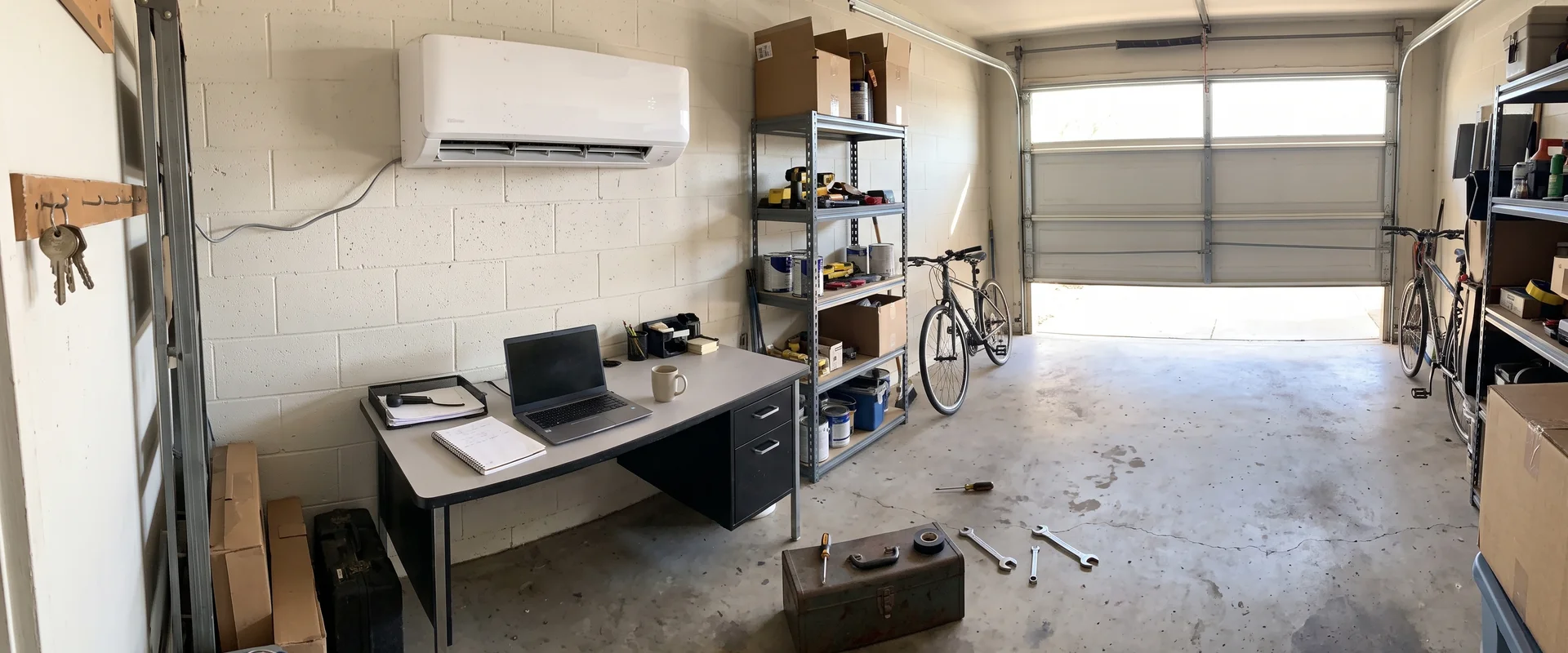
In Arizona that is usually a converted garage, a casita, a sunroom or an addition built long after the original system was sized. In California it is frequently the entire house. Burbank and Pasadena are full of pre-1960 homes built with wall furnaces and no central ductwork at all, and retrofitting conventional ducts into those means soffits, lost closet space and a construction project. A multi-zone mini split needs only a small outdoor unit and three-inch line set penetrations.
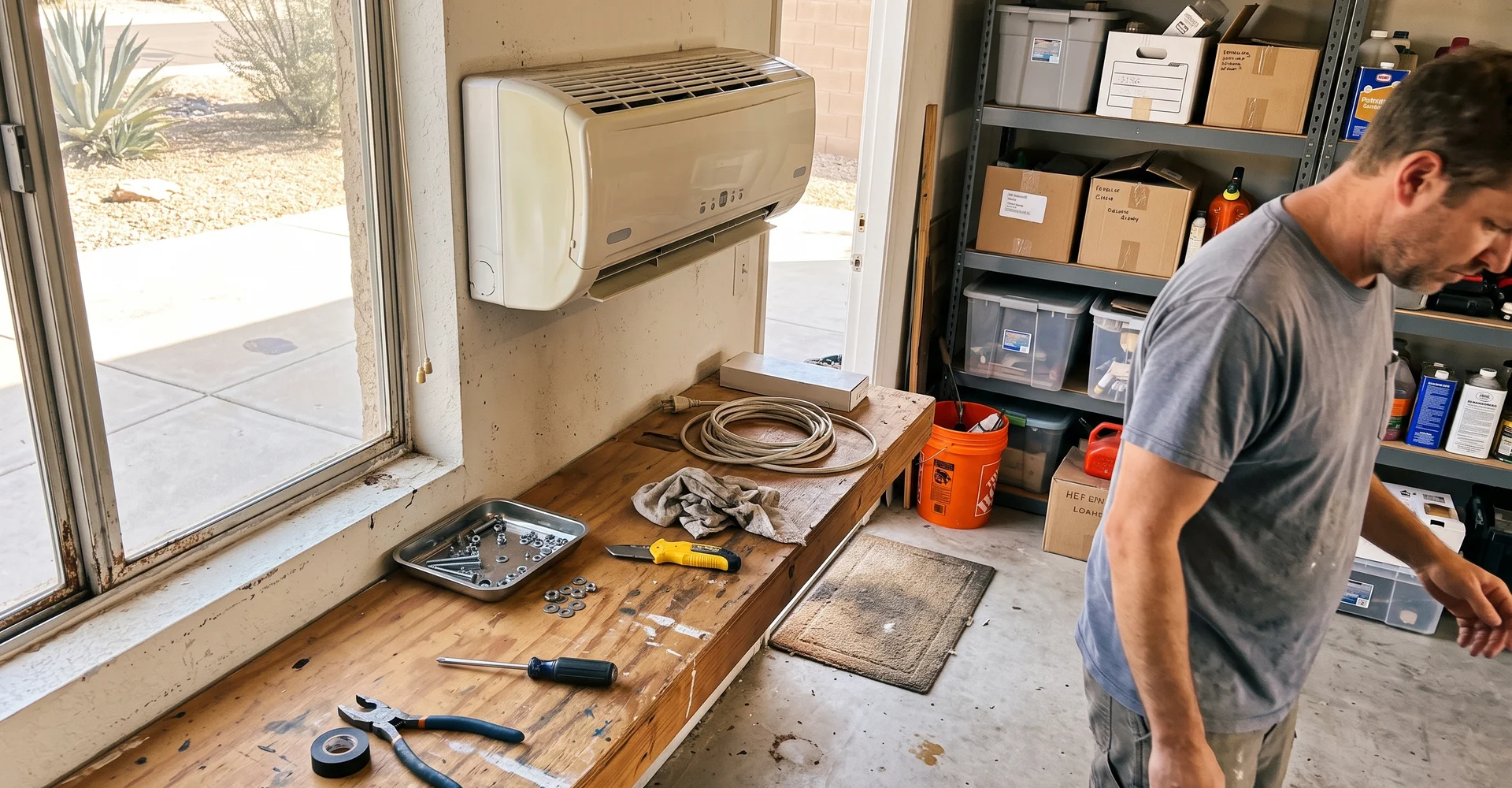
The other thing mini splits do well is extreme conditions in small spaces. An inverter compressor holds capacity at ambient temperatures past 110 far better than a window unit, which is why a mini split makes a Buckeye garage usable in July when a window unit simply gives up.
Why Sizing Matters Even More Here
Oversizing punishes an inverter system harder than a conventional one, which is counterintuitive to most people.
A conventional single-stage air conditioner is either on at full capacity or off. An inverter modulates continuously, and it is at its most efficient running steadily at low output. Size a head correctly and it will spend most of its life running quietly at 30 or 40 percent, which is where the efficiency numbers on the box actually come from. Oversize it and it spends its life cycling between minimum output and off, which is the least efficient way an inverter can operate and also the noisiest.
So each zone gets its own load calculation. Room size, orientation, glass area, insulation and how the space is actually used.
Installation: The Parts That Get Skipped
Line set routing. Decided before equipment, not after. We plan where the line runs, how it will be covered, and how the trunking will look on the exterior. Painted to match the wall, not left as bare insulation.
Flare connections. Made with a proper flaring tool and tightened with a torque wrench to manufacturer specification. Flares tightened by feel are the single most common source of slow refrigerant leaks in mini split systems.
Evacuation. A deep vacuum, measured on a micron gauge, held and verified before charging. Air left in the line set raises head pressure and costs capacity. Moisture left in the line set forms acids that attack the compressor over years. This step takes real time and is the first thing cut on a rushed schedule.
Condensate handling. Gravity drainage where the geometry allows, a condensate removal pump where it does not. Getting this wrong produces water damage months later.
Commissioning. Charge verified, airflow confirmed, each zone tested independently and the controls set up properly.
Cost Guide
| Configuration | Typical installed range | Notes |
|---|---|---|
| Single zone, short line set | $3,800 - $4,800 | Garage or single room, exterior wall placement |
| Single zone, routed line set | $4,800 - $6,000 | Longer run, trunking, possible condensate pump |
| Two to three zones | $6,000 - $10,000 | Multi-zone condenser, per-zone control |
| Four or more zones | $10,000 - $14,000 | Whole-home ductless retrofit |
| Concealed duct units | Add per zone | Where a visible wall head is unwanted |
Where a Mini Split Is Not the Answer
If your home already has sound ductwork and a working central system, adding mini splits usually costs more than fixing what you have. A room that has always been warm is more often a duct sizing or balancing problem, and duct cleaning and sealing plus a static pressure test frequently solves it for less.
If your central system is at end of life and the ducts are serviceable, AC installation is the more economical path.
For a deeper comparison, mini split vs central AC vs window units covers the trade-offs, and where a ductless mini split works best walks through the situations where it is clearly the right call.