What “General Plumbing” Actually Means
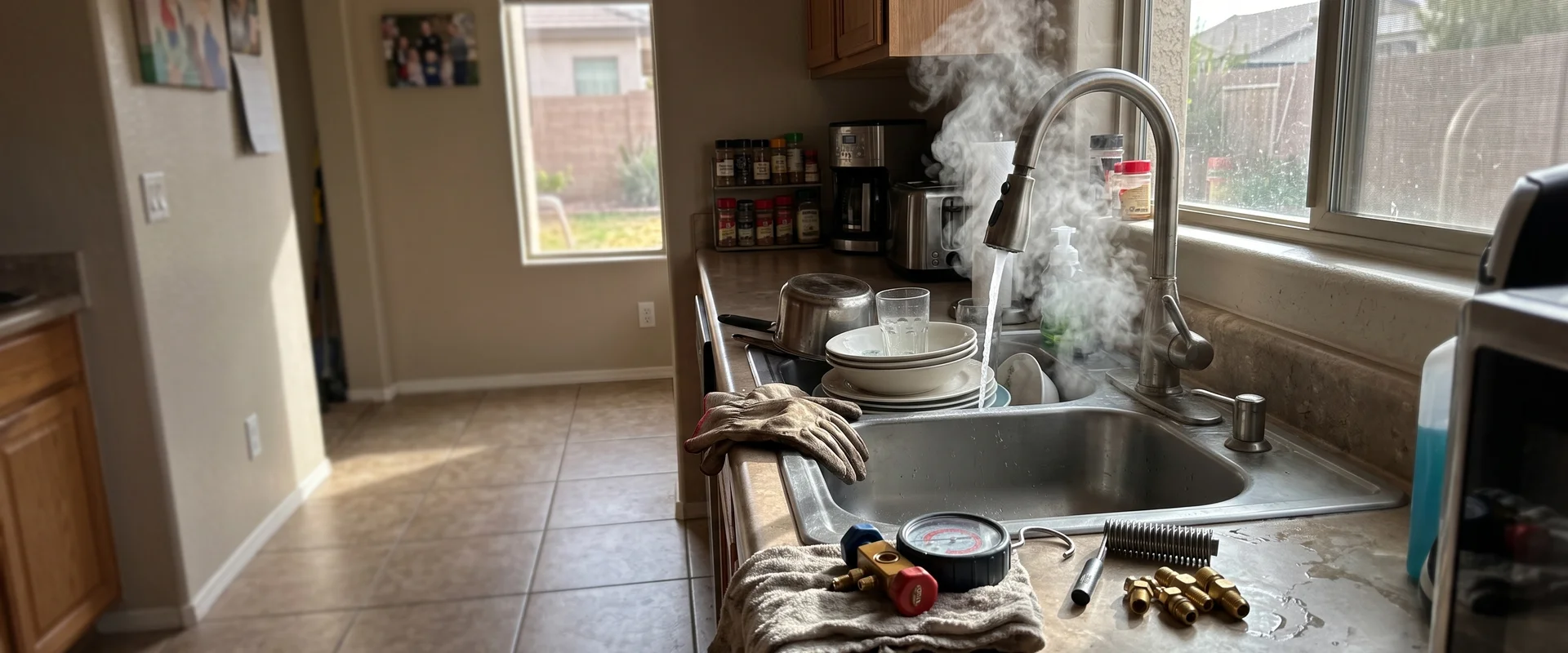
It is the work that fills most of a plumber’s day. A dripping faucet. A toilet that runs all night. A disposal that hums and does not spin. A hose bib that will not shut off. A supply line under a sink that has started to weep. None of these are emergencies in the same way a slab leak is, but they waste water, raise bills and quietly damage the fixture if left alone.
Most of these repairs are short, well-understood scopes with known parts. The reason we exist for them is the same reason we exist for the bigger work: diagnosis before replacement, flat-rate before the work starts, and parts on the truck so it gets done today.
Faucet Repair, Honestly
A dripping faucet is almost always a worn cartridge, a failed stem or a scaled seat. The cartridge is a $20 part, the labor is roughly an hour, and the result is a fixture that does not drip.
The part that gets skipped is the seat itself. Phoenix area water at 15 to 25 grains per gallon deposits calcium and magnesium on every surface it touches, and the seat inside the faucet body scales over until the new cartridge wears against a rough surface and fails early. We clean the seat while we are in there and replace the aerator, so the new part actually lasts.
When the fixture is genuinely past saving, we replace it with a unit chosen for the local water rather than for the margin, and we fit stainless braided supply lines rather than the plastic flex hose that came with the original.
Toilets
Three parts fail, in order of frequency:
- Flapper. Rubber, sits in chlorinated water, fails first. Costs a few dollars and a quarter of an hour.
- Fill valve. Drifts out of calibration and starts topping up continuously. Often misdiagnosed as a flapper problem because the symptom is the same: the tank refills by itself.
- Flush valve. Larger opening, can also fail at the seal.
We replace the full kit rather than the single bad part, so all three components are on the same wear schedule. Replacing only the flapper on a ten-year-old toilet is buying one more year of partial hearing.
When the tank itself is cracked, the bowl is chipped, or the toilet is genuinely past repair, we replace it with a WaterSense-rated unit that fits the existing rough-in and brings the bathroom up to current efficiency without a remodel.
Leaks at the base are not always the wax ring. A failed supply line, a sweating tank and a loose tank-to-bowl connection can present the same way. We diagnose which one it is before pulling the toilet, because pulling and resetting unnecessarily is its own cost.
Disposals
Three outcomes cover almost every disposal call:
- Jammed impeller. The disposal hums but does not spin. Cleared with a hex key inserted into the bottom of the unit. Ten minutes, no parts.
- Tripped overload. The disposal does nothing at all. Reset button on the bottom, frequently after a jam that already cleared itself.
- Genuine failure. The unit is dead, leaks from the body, or is older than ten years. Replacement is the honest answer.
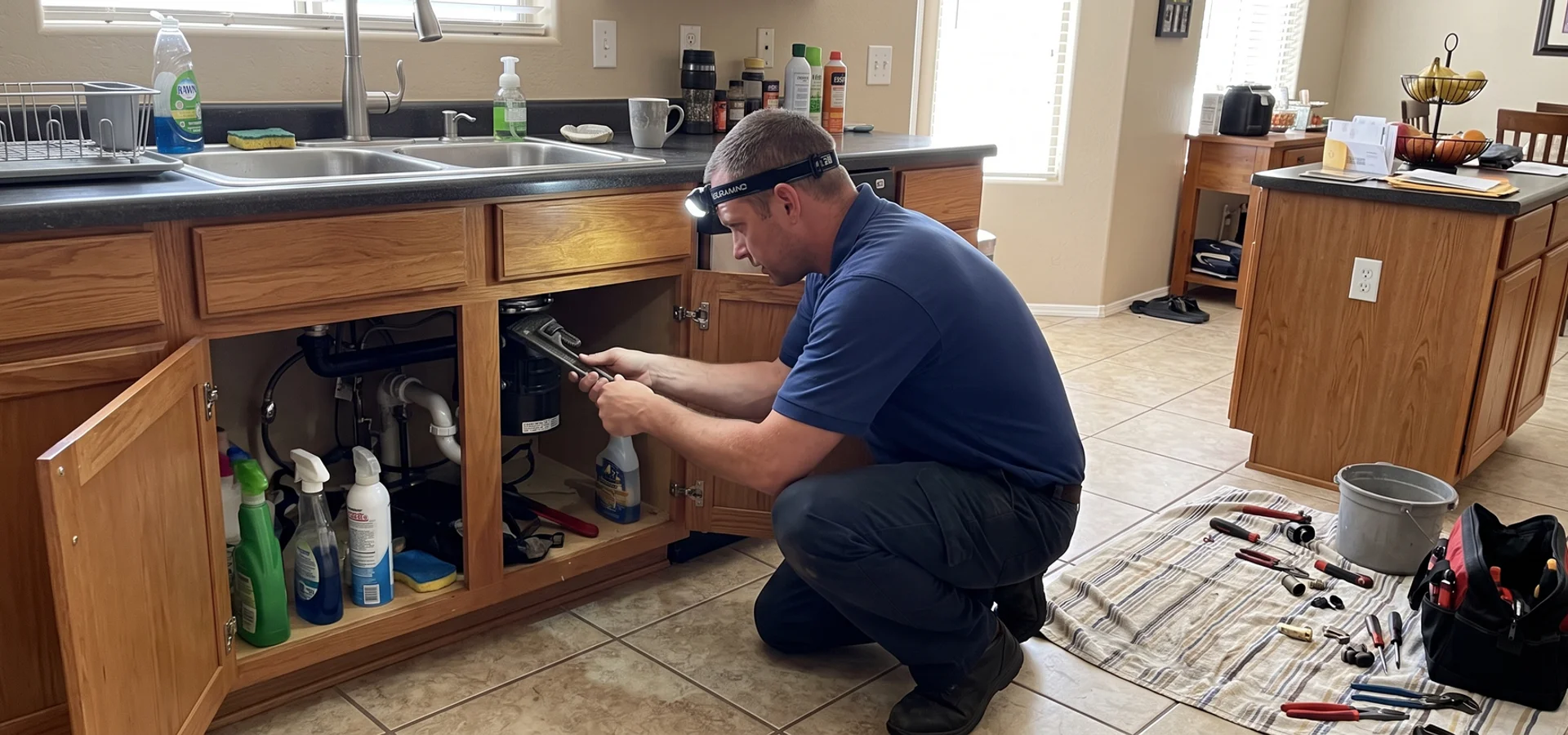
We clear the jam and reset the overload first, and only quote a replacement when the unit has actually failed. New disposals are matched to existing wiring (hardwired vs plug-in), drain size and what you actually need it to do, because oversizing a disposal is its own kind of mistake.
Supply Lines, Angle Stops, Hose Bibs
The small parts that quietly do important work.
- Braided stainless supply lines replace the original plastic flex hose under every sink and behind every toilet. Cheap, durable, dramatically less likely to fail.
- Angle stops and straight stops are the shutoff valves under sinks and behind toilets. Older multi-turn stops seize and no longer close fully. We replace them with quarter-turn stops in common sizes.
- Hose bibs carry a vacuum breaker to prevent irrigation water from being siphoned back into the house supply. Many older homes are missing them. Replacement is five minutes per bib and protects the household water from contamination.
When It Is More Than General
Some leaks are not general plumbing. Water on the floor near a water heater, on the ceiling below a bathroom, or near the base of a toilet that turns out to be a slab leak upstream all need a different scope. Emergency plumbing covers what happens next, and water heater services covers heater-side failures. Drain cleaning and hydro jetting covers backups and recurring clogs.
For the deeper detail, signs of a slab leak and why hard water kills Arizona water heaters go further than this page.