
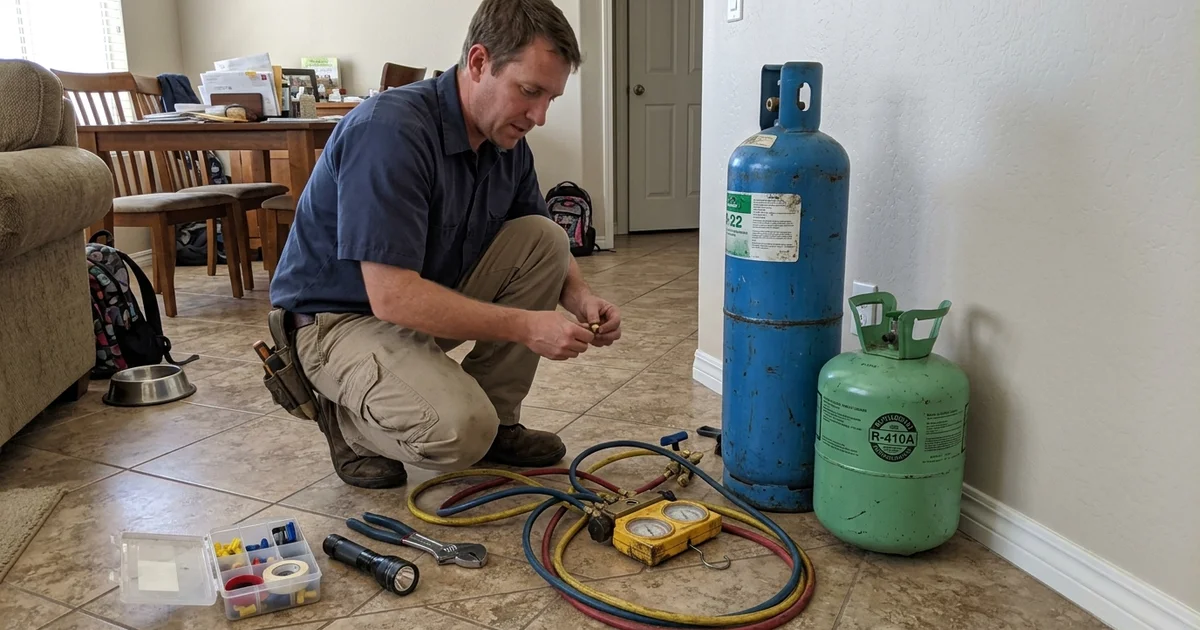
What Changed and Why
The refrigerant industry is transitioning away from R-410A toward lower global warming potential alternatives, principally R-454B and in some equipment R-32. The driver is regulatory: rules phasing down high-GWP hydrofluorocarbons.
R-410A has a high global warming potential. R-454B is substantially lower. The regulation targets what manufacturers may produce and sell, which is why new equipment is shifting to the new refrigerant while existing equipment carries on exactly as it did.
The new refrigerants are classified A2L, meaning mildly flammable. That classification changes things for installers, who need updated training, recovery equipment and leak detection practices, and it introduces code requirements around charge limits and installation. Any AC installation and replacement we quote today accounts for it. For a homeowner with a properly installed system, it does not change day-to-day ownership.
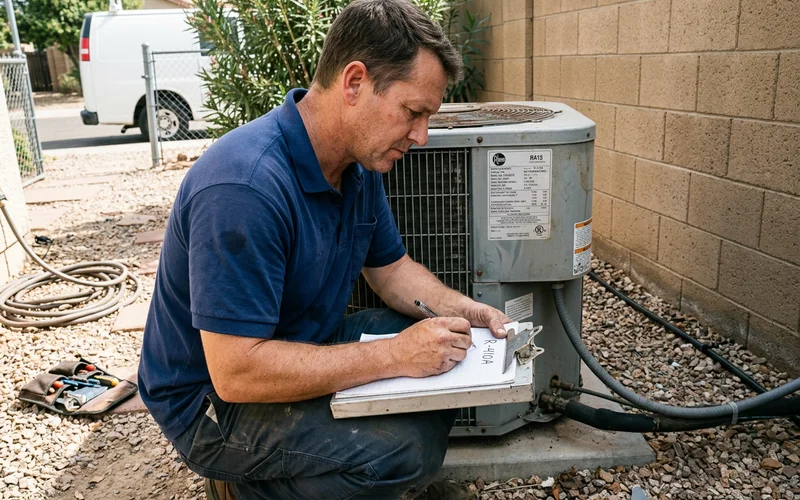
You are not required to replace anything
The rules govern manufacturing, not ownership. If a contractor tells you the law forces you to replace a working R-410A system, they are selling, not informing.
What This Actually Means for Your System
| Your situation | What the transition changes |
|---|---|
| Working R-410A system, no faults | Nothing. Run it for its full remaining life. |
| R-410A system needing a minor repair | Nothing meaningful. Electrical parts are unaffected. |
| R-410A system needing a significant refrigerant charge | Refrigerant cost is rising and will continue to |
| R-410A system needing a compressor or coil | Worth weighing against replacement more carefully than before |
| Buying new equipment now | Likely R-454B, which is not backward compatible with R-410A components |
The important nuance is in that fourth row. The transition does not force replacement, but it does shift the arithmetic on repairs that were already borderline. A twelve-year-old R-410A system facing a coil leak and a full recharge is a different financial proposition than the same repair was three years ago, because the refrigerant line item has moved.
That is a genuine input into the repair or replace decision, and it is worth having the number in front of you rather than a general impression.
Buying During a Transition
New equipment sold today is increasingly R-454B, and there are a few things worth asking before you commit.
Is the equipment R-454B or R-410A? Some R-410A inventory remains in the channel. Neither is wrong, but it affects the system’s long-term service picture and you should know which you are buying.
Is the installer trained and equipped for A2L? This is not a formality. A2L refrigerants require appropriate recovery equipment, leak detection practices and installation compliance. Ask directly.
Is the system a matched AHRI-certified pair? This matters for performance, for warranty and for rebate and tax credit eligibility, and it matters regardless of refrigerant.
Does the quote reflect current pricing honestly? Equipment pricing has moved through the transition. A quote that seems unusually low is worth understanding rather than accepting.
What We Do About It
We are not going to tell you to replace working equipment. If your R-410A system is healthy, keep it, and we will keep servicing it.
What we will do is put the refrigerant question honestly into the repair-versus-replace conversation when a large repair comes up, because pretending it has not changed would be as misleading as claiming you are legally required to replace.
And when you do replace, AC installation and replacement here starts with a load calculation rather than a refrigerant scare. Run TrueQuote AI and you will see current pricing on correctly sized equipment, with no urgency attached to it that the situation does not warrant.
The one-line summary worth carrying: the transition is real, it affects new manufacturing and gradually affects repair costs on old systems, and it does not require you to do anything today.