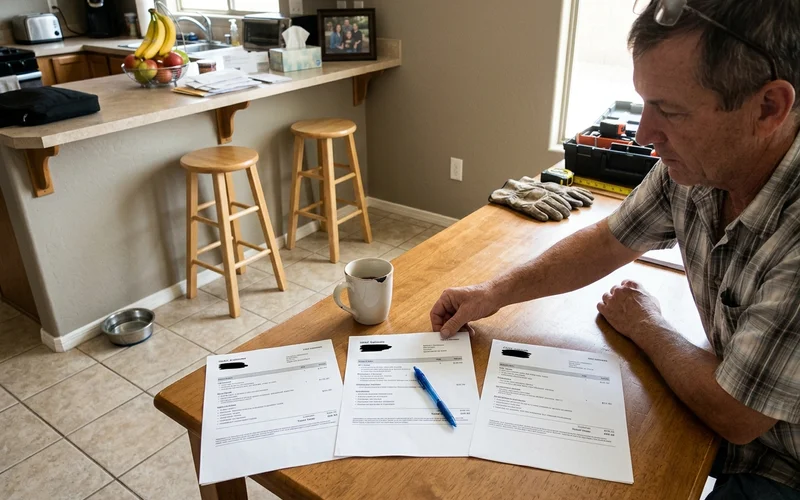
Tony K. called us in early June with three estimates on his kitchen table and a question that comes up more often than it should: why does everybody want to sell me a bigger air conditioner than my house is?
His house is 1,800 square feet in Chandler, single storey, built in the mid-2000s. Standard tract construction, decent windows, a west-facing great room. All three companies had recommended a five-ton system. The prices varied by a few thousand dollars, but the size did not move.
Where Five Tons Comes From
There is a rule of thumb in this industry that says roughly 400 to 600 square feet per ton in a hot climate. Apply the aggressive end of that to 1,800 square feet and you land at four and a half tons, round up for the desert, and five tons is what comes out of the tablet.
The rule of thumb is not a calculation. It ignores orientation, glass area and type, insulation levels, infiltration rate, ceiling height, shading, and the actual design temperature for the address. It exists because it is fast, and it is biased upward because an oversized system almost never generates a complaint the homeowner traces back to sizing.
Why oversizing is safe for the contractor and expensive for you
A too-big system will always get the house cold. What it will not do is run long enough to pull humidity out, reach the far rooms, or avoid burning through compressor start cycles. Those complaints get blamed on the house, the ducts, or the weather.
What the Load Calculation Said
Tony ran his own numbers through TrueQuote AI before we ever spoke. It walks through square footage, construction type, insulation, window area and orientation, and runs a genuine Manual J against the local design temperature.
The result came back well under four tons.
That gap is not a rounding difference. It is more than a full ton of capacity, which changes the equipment, the price, and how the system will behave for the next fifteen years.
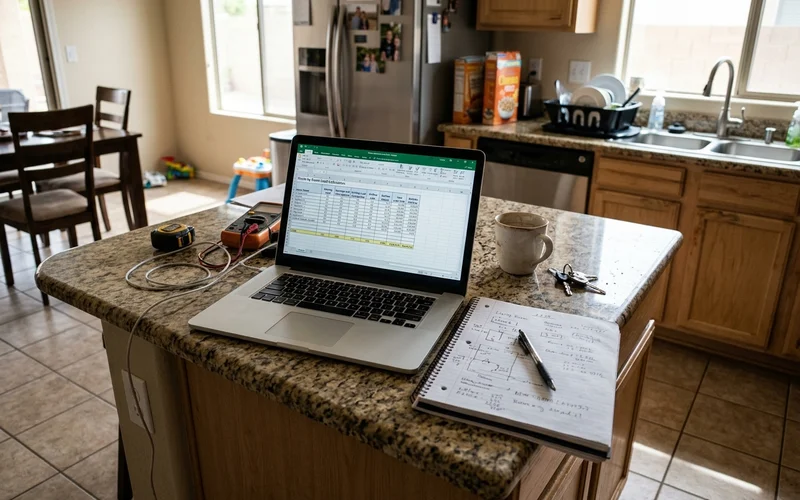
I reviewed the calculation personally, which is something I still do on replacements where the answer differs sharply from what the homeowner has been told. Nothing in Tony’s inputs was unusual. The house simply does not need five tons, and it never did.
What Actually Got Installed
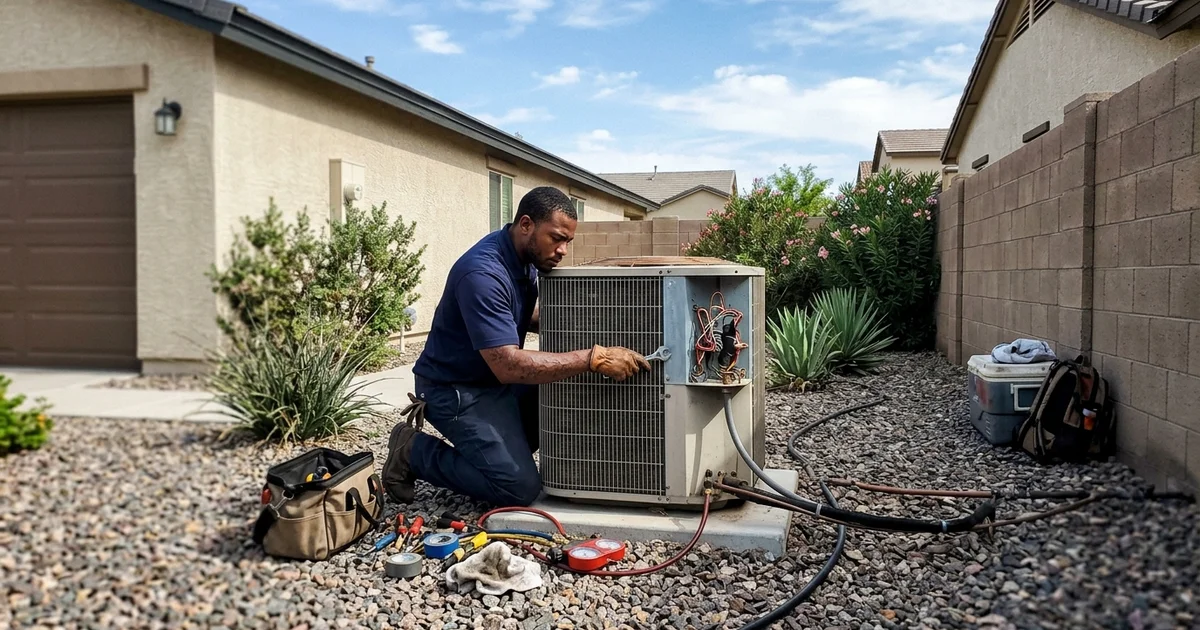
A correctly sized variable-speed system. Line set flushed, new pad, brazed under flowing nitrogen, deep vacuum verified on a micron gauge, charge set by subcooling, static pressure measured and blower speed set to deliver design airflow.
We also took a static pressure reading on his existing ductwork before finalising anything, because a system that is correctly sized on paper still underperforms if the ducts are restricting it. His were fine, which is not always the case in this era of construction.
| Quoted by others | What we installed | |
|---|---|---|
| System size | 5 tons | Under 4 tons |
| Sizing method | Square footage rule of thumb | Manual J load calculation |
| Sales visit required | Yes, all three | None |
| Price difference | Baseline | Over $3,000 less |
| Expected behaviour | Short cycles, poor dehumidification | Long low-output cycles |
The Part That Matters More Than the $3,000
The saving was real and Tony was happy about it. But the durable benefit is how the system runs.
A variable-speed inverter sized correctly spends most of its life running steadily at thirty or forty percent output. That is where the efficiency ratings on the box actually come from, it is quieter, it dehumidifies properly, and it avoids the start-up wear that kills compressors. An oversized version of the same equipment cycles between minimum output and off, which is the least efficient and noisiest way an inverter can operate.
Fifteen years of that difference is worth considerably more than three thousand dollars.
If You Are Holding Three Estimates Right Now
Compare the sizes, not just the prices. If all three quote the same tonnage and none of them can show you a room-by-room load calculation supporting it, you are looking at three versions of the same rule of thumb.
Run the calculation yourself first. It is free, it takes a few minutes, and it changes what the conversation is about.
Get the real number for your house before anyone visits — Run TrueQuote AI or read more about AC installation and replacement.