
Two Ways to Fix a Failed Lateral
Both of these are sewer line repair methods that come after a diagnosis, never before one. A camera inspection is not a formality here, because the finding determines which of the two is even possible.
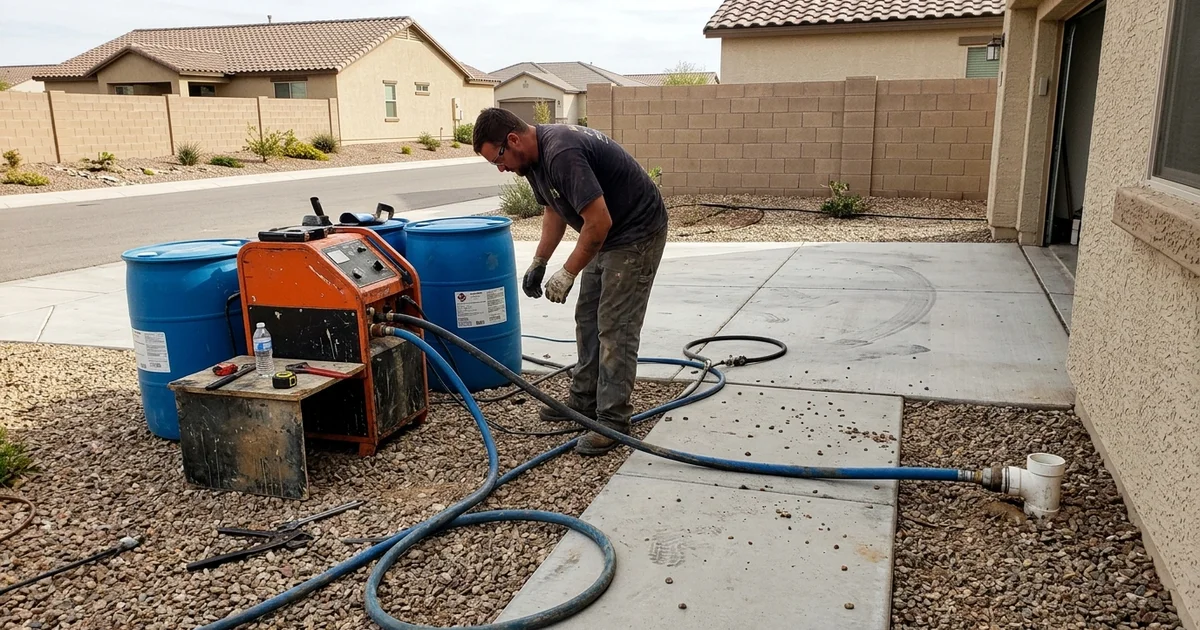
Cured-in-place pipe lining (CIPP) installs a resin-saturated liner inside your existing pipe through existing access points, then cures it in place. The result is a continuous jointless pipe within the old one.
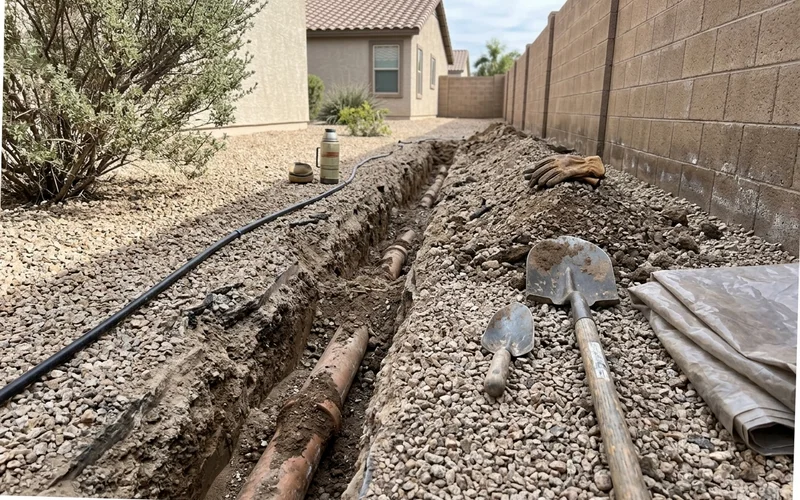
Excavation opens the ground, removes the failed pipe and lays new PVC to correct grade.
The choice is not a preference. It depends on what the camera found, and then on what is above the pipe. Sewer line repair quotes are written against that finding.
How Lining Works
A liner is saturated with resin, then inverted or pulled into the host pipe through a cleanout or a small access pit. It is inflated so it presses tightly against the existing pipe wall, then cured, using heat, steam or ultraviolet light depending on the system.
What you end up with is a new pipe formed inside the old one. No joints, a smooth interior, and slightly reduced internal diameter, which matters only where the original pipe size was already marginal.
Preparation is most of the work: the line has to be thoroughly cleaned and, on cast iron, descaled first, because the liner cures against whatever surface it finds.
The Comparison
| Trenchless lining | Excavation | |
|---|---|---|
| Typical cost | $4,500 - $9,500 | $6,500 - $15,000 |
| Surface disruption | Access points only | Full trench, restoration required |
| Duration | 1-2 days | 2-5 days |
| Works when | Host pipe structurally intact | Any condition, including collapse |
| Fixes root intrusion | Permanently, all joints sealed | Yes, with new pipe |
| Fixes a belly | No, follows existing shape | Yes, re-laid to grade |
| Effect on diameter | Slight reduction | New pipe at full size |
| Expected lifespan | ~50 years | ~50+ years |
| In caliche soil | Strong advantage | Meaningfully more expensive per foot |
Restoration is the hidden variable
Comparing lining cost against excavation cost without including driveway, hardscape or mature landscaping replacement produces the wrong answer in most West Valley properties.
Why Caliche Changes the Arithmetic Here
Much of the West Valley, including Glendale, Peoria, Surprise and Goodyear, sits on caliche, a cemented calcium carbonate layer that behaves more like soft rock than soil.
Hand digging through it is slow and brutal. Machine excavation needs heavier equipment and more time per foot than the same depth in ordinary ground. That is a real cost difference on any trench, and it is the practical reason trenchless deserves serious evaluation here before anyone picks up a shovel.
The same logic applies anywhere the ground above the pipe is expensive to restore: a paved driveway, a mature landscaped garden, a patio, or a hillside property in the Crescenta Valley where access is already difficult.
When Excavation Is the Only Honest Answer
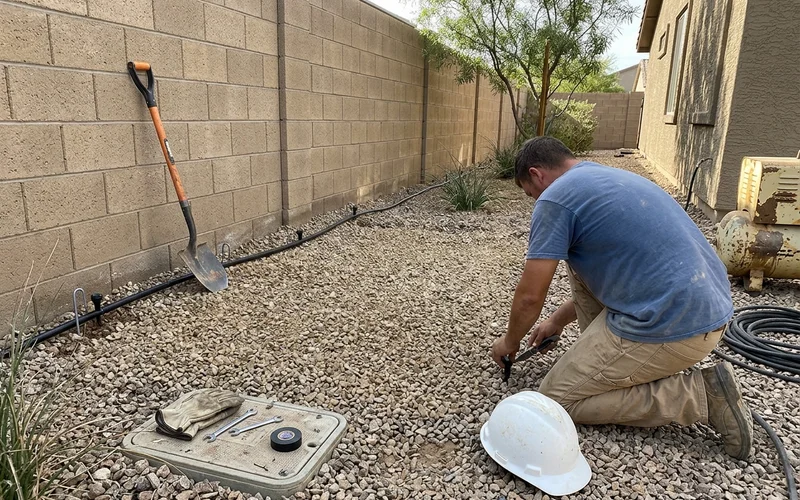
We will tell you to dig when digging is right, and there are four situations where it is:
A belly. The line has settled and lost its fall, so it holds standing water and solids. A liner follows the existing shape including the sag, so lining leaves the problem exactly where it was. Correcting it requires excavating and re-laying to grade.
A collapse. No host pipe left to line against.
A severe offset. Where two sections have shifted far enough that a liner cannot pass or cannot seat properly.
Too much wall loss. Cast iron corroded to the point where there is not enough structure for the liner to cure against.
A Third Option Worth Considering
Not every camera finding is a structural failure. A line coated in grease or lightly rooted but structurally sound may need cleaning rather than replacing.
Hydro jetting scours the full pipe diameter and can restore a line to serviceable condition for a fraction of either repair cost. On a lateral with early root intrusion, jetting now and lining as a planned future project is frequently the sensible sequence rather than doing everything at once.
The rule underneath all of this stays the same: camera inspection first, then decide.