
The Mechanical Difference
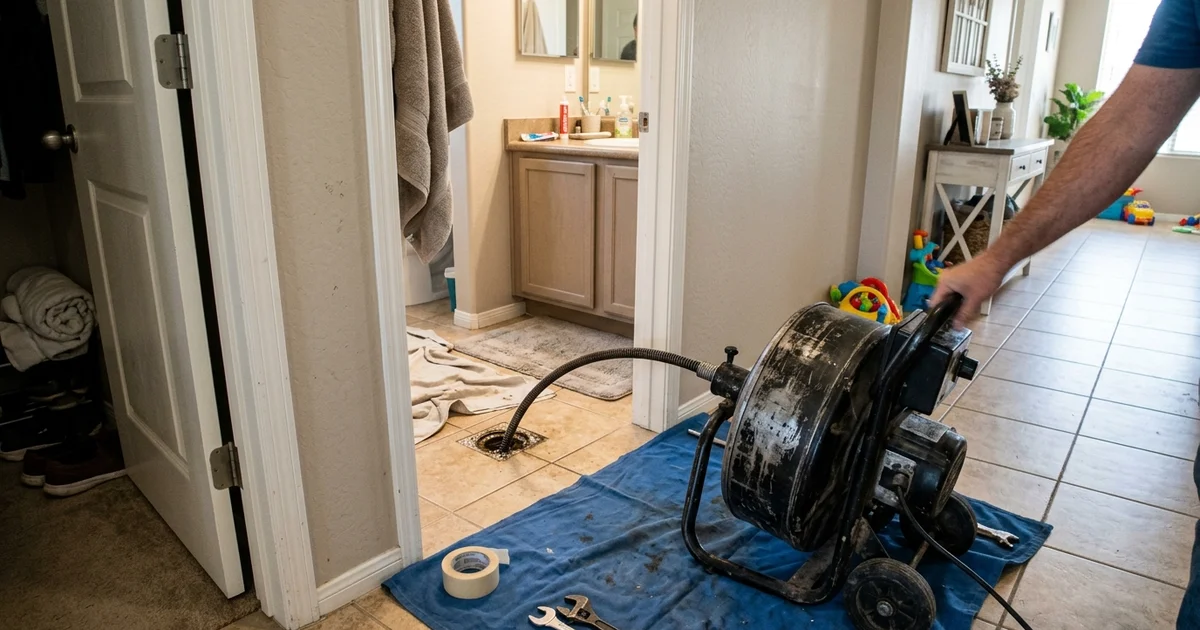
A cable snake is a rotating steel cable fed into the line. The head bores through whatever is blocking flow, creating a channel. Water runs again. The material coating the pipe wall is left almost entirely in place.
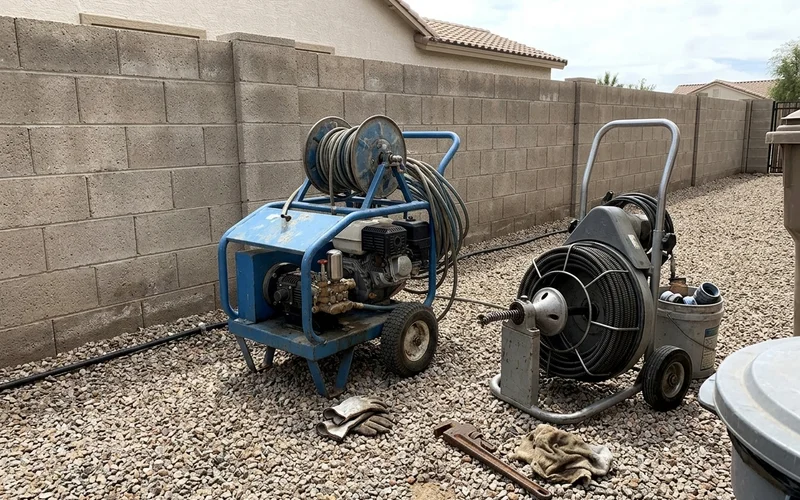
Hydro jetting propels water at high pressure through a specialised nozzle. Rear-facing jets pull the hose forward while scouring the full internal circumference of the pipe, removing grease, soft scale and root material from the wall itself.
One clears a blockage. The other cleans a pipe. That is the entire distinction, and it determines which is appropriate. Drain cleaning and jetting covers both because both have their place.
Cost and Durability Compared
| Cable snaking | Hydro jetting | |
|---|---|---|
| Typical cost, fixture line | $129 - $320 | Rarely appropriate |
| Typical cost, main line | $320 - $580 | $580 - $950 |
| Best for | Discrete obstructions | Grease, roots, soft scale |
| Restores full diameter | No | Yes |
| Durability on a coated pipe | Weeks to months | Years |
| Durability on a one-off clog | Indefinite | Indefinite, but unnecessary |
| Risk to fragile pipe | Low | Real, requires assessment |
The tell is repetition
If the same line has been snaked three times, snaking is not solving it. That is the point at which the extra cost of jetting becomes the cheaper option.
When Snaking Is the Right Answer
We quote the smaller number in these situations, and we would rather be asked why than assumed to be upselling:
- A single fixture clogged for the first time
- Hair in a shower or bath drain
- An object dropped into a toilet
- A branch line with no history of problems
- A pipe too fragile for safe jetting, where jetting would be the wrong call regardless
When Jetting Is Worth the Difference
- Kitchen lines with grease. The only method that removes the layer rather than boring through it.
- Laterals with root intrusion. Removes far more root mass than cutting, and buys real time before lining.
- Recurring blockages in the same line. Because the recurrence is telling you the pipe is coated.
- Before a camera inspection on a heavily fouled line, so the camera can actually see the pipe wall.
- Preventive service on a property with known root activity, ahead of the seasonal peak.
When We Say No to Jetting
High-pressure water can damage pipe that is already compromised. Before jetting any older line we establish what it is made of and what condition it is in.
Candidates for harm include corroded thin-wall cast iron, damaged clay, and Orangeburg pipe. In those cases we either reduce pressure, use a different method, or tell you plainly that the pipe itself needs addressing rather than cleaning.
The risk lives entirely in applying pressure without knowing what is underground, which is why we assess first. On sound pipe of any material, properly applied jetting is safe and is the industry standard for thorough cleaning.
The Decision in One Line
First-time clog in one fixture, snake it. Same line failing repeatedly, jet it and then find out why with a camera inspection.
Recurring clog causes covers what the camera usually finds, and each of those findings has a different correct answer.