
A Repeat Clog Is a Different Problem
A drain that clogs once is an event. A drain that clogs repeatedly in the same place is telling you something about the pipe itself, and the fix is different.
The distinction matters because the standard response to a clog, run a cable through it, addresses the event and not the condition. Water flows again, everyone is satisfied, and the underlying cause is untouched.
Three causes account for nearly all recurring clogs, and each shows up on a camera immediately. Drain cleaning service that keeps returning to the same line should have moved past snaking a while ago.
Cause One: Root Intrusion
The pattern: a main line backup on roughly an annual cycle, often at the same time of year.
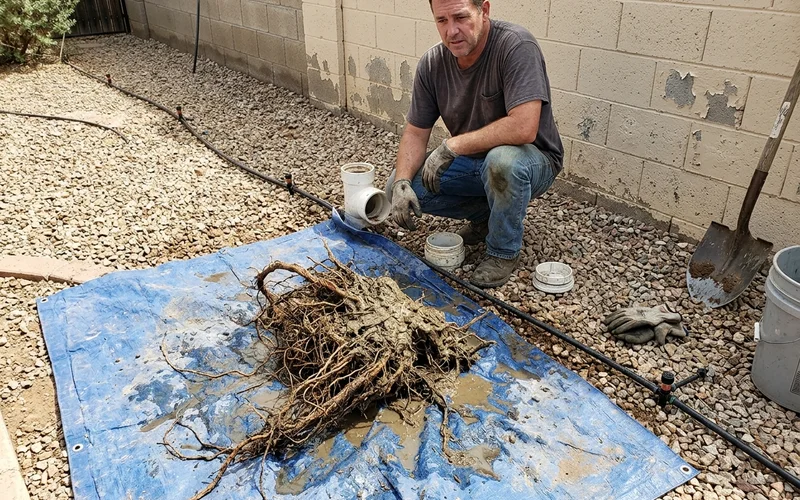
Roots enter older clay and cast iron laterals through joint gaps, following the moisture and nutrient gradient. Once inside they expand into a mass that catches everything flowing past.
Cutting or snaking removes the mass and leaves the entry point exactly as it was, so it recurs on a predictable schedule as the roots regrow.
Worst in areas with mature street trees over older laterals: La Crescenta, Pasadena, older Los Angeles neighbourhoods, and central Phoenix.
The actual fix: hydro jetting removes far more root material than cutting does and buys real time. Lining the pipe seals every joint at once and ends it permanently.
Cause Two: Grease Accumulation
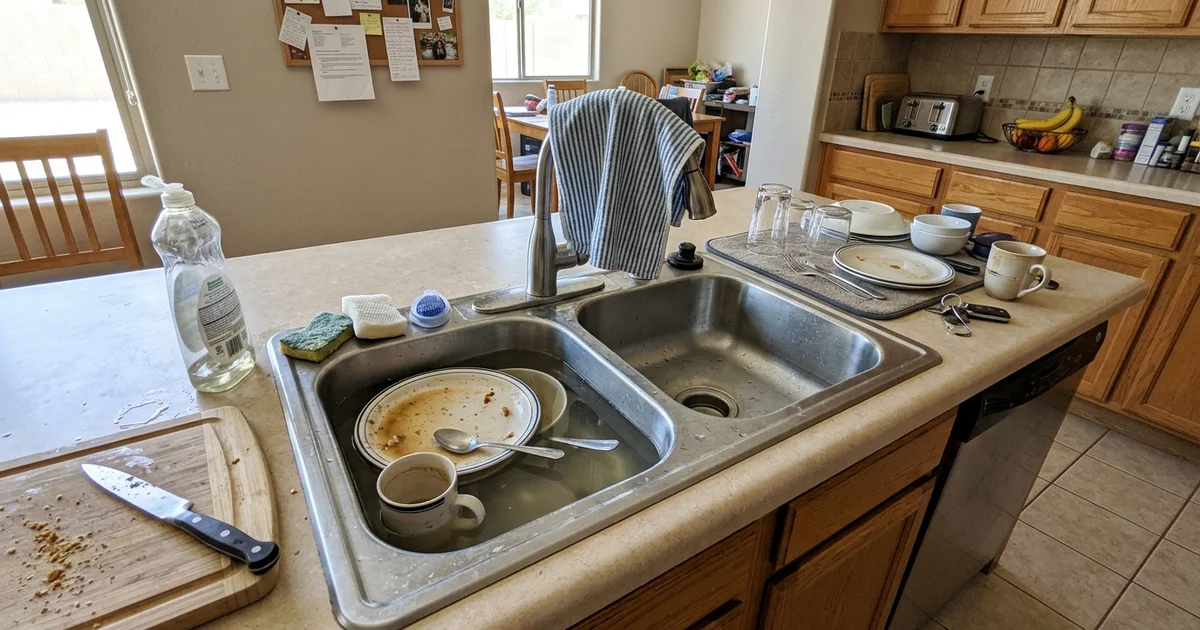
The pattern: a kitchen line that slows progressively, backs up, gets cleared, and repeats within months.
The mechanism catches people out. Cooking fats go down the drain warm and liquid, travel some distance along the pipe, then cool and solidify on the wall. Every subsequent wash adds a layer. The narrowing happens gradually, and the eventual blockage forms a good distance from the sink.
That distance is why a local snaking clears it briefly. The channel bored through the grease closes again as new material catches.
What does not work: hot water and dish soap simply move the solidification point further along the line. Boiling water does the same. Neither removes the accumulated layer.
The actual fix: hydro jetting scours the grease off the pipe wall and restores full diameter.
Cause Three: Cast Iron Scale
The pattern: an older home where multiple drains run slowly and clear only briefly.
Cast iron corrodes from the inside as it ages, and the corrosion products build into a rough scale layer that narrows the bore and catches everything passing through. Central Phoenix, older Los Angeles neighbourhoods and pre-1960 California housing are full of it.
Snaking a scaled line does nothing to the scale. The cable travels through the middle and leaves the rough narrowed wall intact.
The actual fix: descaling, which mechanically removes the layer and restores something close to original diameter, frequently followed by lining.
The camera pays for itself on the second clog
Three causes, three different repairs, and one diagnostic that distinguishes them in about an hour.
What the Frequency Tells You
| Pattern | Likely cause |
|---|---|
| Annual main line backup, same season | Root intrusion |
| Kitchen line slowing every few months | Grease |
| Multiple drains slow in an older home | Cast iron scale |
| Backs up within weeks of clearing | Belly, offset or collapse |
| Toilet gurgles when the washer drains | Main line, downstream of both |
| Backs up into a shower when a toilet flushes | Main line, act quickly |
The last three point past cleaning entirely and into structural territory, which is where camera inspection stops being optional.
Ending the Cycle
The sequence that actually resolves a recurring clog is straightforward:
- Camera the line and record it
- Identify which of the three causes you have
- Apply the matching repair rather than the default one
- Re-camera afterward to verify
What hydro jetting does covers the difference between clearing a blockage and cleaning a pipe, which is the distinction underneath all of this.