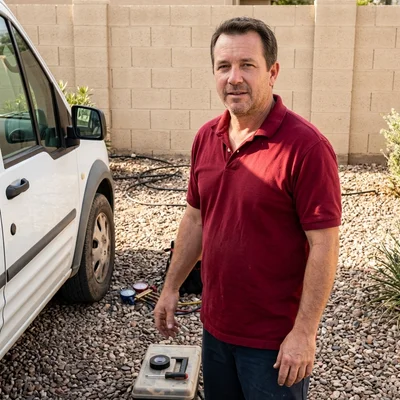

The call came in at 6:14 AM on Thanksgiving. The homeowner had 14 people coming for dinner at 3 PM and no hot water. The water heater was a 12-year-old Bradford White 40-gallon gas unit in the garage. The pilot was out. The homeowner did not know how to relight it. We had the unit running by 8:30 and the thermocouple replaced by 10:15. The turkey went in on time.
This is what a same-day repair looks like when the diagnosis is right and the part is on the truck.
What We Diagnosed Over the Phone
The homeowner described the symptom in one sentence: “the pilot is out and the burner will not light.” That is a textbook thermocouple or pilot assembly symptom on a gas water heater. The pilot generates a small flame that heats the thermocouple. The thermocouple generates a millivolt signal that proves the pilot is lit. The gas valve opens only when the thermocouple is generating that signal. When the thermocouple fails, the gas valve stays closed and the burner will not light.
We asked the homeowner to check three things while we were driving to the house. The pilot was indeed out. The thermocouple wire was intact. The gas valve was not clicking. That was enough to confirm the thermocouple was the failure point - either the thermocouple itself had failed, or the pilot assembly was so fouled that the thermocouple could not get hot enough to generate the signal.
What the Homeowner Did Before We Arrived
We walked her through the immediate steps so the house was not in worse shape by the time we got there. She confirmed no one was going to use hot water for the next two hours. She located the gas shutoff at the water heater (the yellow handle on the gas line at the top of the unit). She did not need to turn it off - we did that when we arrived - but knowing where it was made the rest of the visit smoother.
We also asked her to locate the manual for the water heater. Most gas water heaters have a lighting instruction sticker right on the unit, but if she had the manual in a drawer, the troubleshooting section sometimes identifies the thermocouple specifically. She found the manual. We did not end up needing it, but having it on site let us confirm the model and the part number without guessing.
What the Repair Looked Like
At the house, 8:18 AM. Turned off the gas at the unit. Pulled the burner access cover. Confirmed the pilot was out and the thermocouple wire was intact. Removed the thermocouple from the pilot assembly bracket and pulled it out of the pilot tube. Brought the new thermocouple to the truck, compared the two side by side to make sure the length and the fitting matched.
Installed the new thermocouple. Pilot assembly back in place, thermocouple threaded into the gas valve at the bottom and clipped to the pilot bracket at the top. Reconnected the piezo igniter wire.
Lit the pilot. Held the gas control knob down for 30 seconds to prime the thermocouple, lit the pilot with a long-reach lighter, kept the knob down for another 30 seconds while the thermocouple heated up. Released the knob. Pilot stayed lit. Turned the gas control to “on.” Burner lit.
Verified. Let the burner run for five minutes. Checked the burner flame - sharp and blue, no lazy yellow. Let the burner run through two full heating cycles. Set the thermostat to a normal operating temperature. Confirmed the unit was firing on demand.
8:42 AM. Unit was running. The homeowner had hot water at the kitchen sink by 8:55. The tank took about an hour to fully recover after a cold start, but she had usable hot water within 15 minutes of the burner lighting.
What It Cost
| Line item | What it covered |
|---|---|
| Same-day service ticket | Thanksgiving Day rate |
| Thermocouple | Universal-fit, on the truck |
| Labor | 30 minutes on site |
Total: $290 for the visit plus the part. A planned replacement during a normal service visit would have been $180. The Thanksgiving Day premium was the cost of running a no-hot-water emergency on a holiday.
What the Homeowner Brought to the Visit
Three things made this visit faster than it could have been.
The diagnosis was clear. Pilot out, burner will not light, gas valve not clicking. That is a thermocouple problem on a gas water heater. We knew what to bring before we left the office.
The part was on the truck. Every service truck in our fleet carries universal-fit thermocouples for the residential gas water heaters we service. The technician did not need to drive to the warehouse. The repair happened at the first visit.
The homeowner was calm and the house was safe. No one was going to be running hot water for two hours. The gas supply was controllable. The area around the water heater was clear. None of those things are guaranteed on an emergency call, but when they are true, the repair moves quickly.
What the Holiday Taught Us About Holiday Plumbing
Thanksgiving, Christmas, New Year’s, and the run-up to each of them produce a predictable spike in no-hot-water calls. The pattern is the same every year. House has been lightly used for weeks or months while the family is traveling. The pilot assembly in the pilot gets dusty. The thermocouple that was marginal in October fails in late November. The homeowner turns on a hot water faucet on the morning of a family event and gets nothing.
A water heater that is going to fail on a holiday weekend is one that was going to fail anyway. The timing is the only variable. A spring or fall tune-up that includes checking the thermocouple, cleaning the pilot assembly, and confirming the burner pattern would have caught the failure in advance.
We tell homeowners with water heaters more than eight years old to schedule a pre-holiday check in late October. The visit is 45 minutes, costs in the neighborhood of $140, and it catches the components that fail quietly before they fail loudly on Thanksgiving morning.
What We Did After the Repair
We told the homeowner three things.
The water heater is 12 years old. It has lived past the median service life for a gas tank in Phoenix water. The thermocouple repair was the right call today, but the unit will need a new home within the next two to four years.** We gave her the option of putting a softener on the supply to extend the life of the next tank, which we had been recommending on her annual tune-up visits.
The new thermocouple has a one-year warranty. If the pilot goes out again within a year, the part is covered, and the labor on the same repair is discounted.
The pre-holiday check is worth scheduling next October. A 45-minute visit in October that costs $140 prevents the $290 Thanksgiving Day call. The math is straightforward.
The homeowner scheduled the pre-holiday check on her way out the door to pick up the turkey. That is a Thanksgiving plumbing story we are happy to be part of.
If your water heater is more than eight years old and you have not had a fall check - request a water heater inspection or read more about no-hot-water diagnostics.