
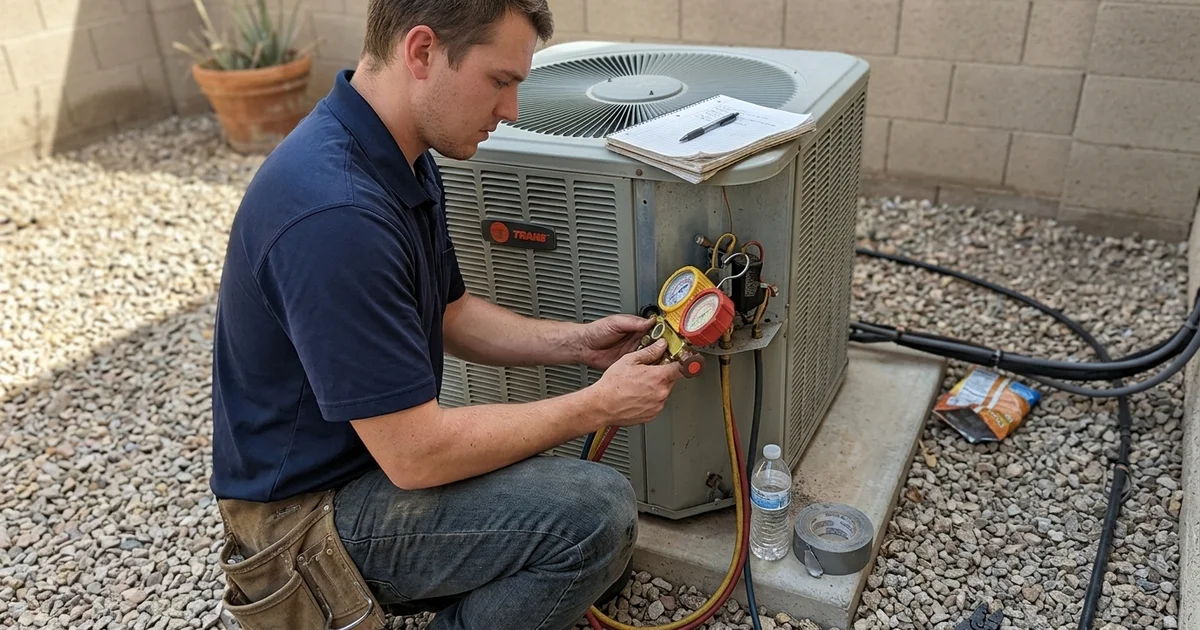
The Difference Between a Tune-Up and a Filter Swap
A lot of what gets sold as HVAC maintenance is a visual inspection, a filter change and a sticker on the cabinet. It takes fifteen minutes, it produces no information, and its real purpose is frequently to generate a replacement quote.
A genuine tune-up produces measurements. Numbers you keep, that mean something next year when compared against this year’s.
Our AC tune-up service runs $27 per unit and takes about an hour per system, which is roughly the technician’s time and no more. The pricing is deliberate: at that number the visit can be an inspection rather than a sales call.
The Full Checklist
Electrical
- Capacitor tested under load, not visually inspected. The single most valuable measurement in a Southwest tune-up.
- Contactor condition, checking for pitting and welding.
- Compressor and fan motor amp draw compared against nameplate. Rising amp draw is an early warning on a motor heading toward failure.
- Wiring, terminals and disconnect condition.
Refrigerant
- Subcooling and superheat readings taken at operating conditions.
- Line temperatures and pressures recorded.
- Visual inspection for oil residue at joints, which indicates a leak.
Airflow
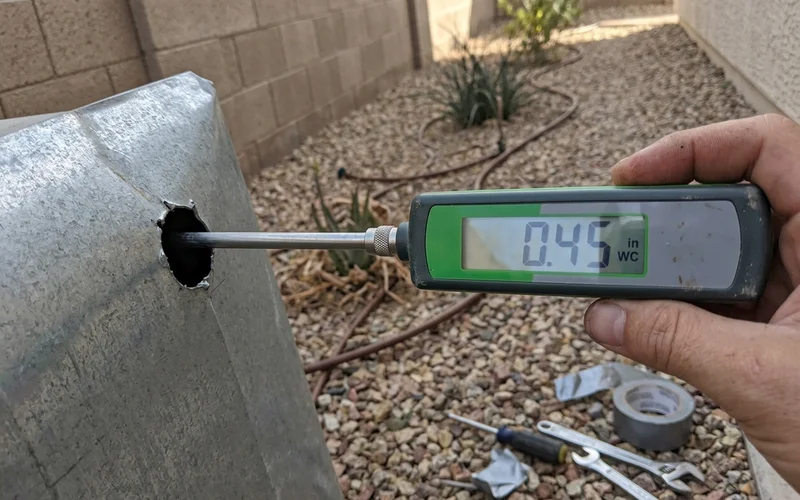
- Static pressure measured across the air handler with a manometer.
- Filter condition and whether the current filter is appropriate for the blower.
- Blower wheel condition, which accumulates a film that reduces airflow measurably.
- Evaporator coil condition, checking for fouling and biological growth.
Condition and drainage
- Condenser coil cleaned.
- Condensate drain line cleared, float switch tested where fitted.
- Cabinet, panels and insulation condition.
- Thermostat calibration checked against an independent reading.
You should leave with a sheet of numbers
Not a checkmark list. Actual readings, so next year’s visit can compare against them and spot a trend before it becomes a failure.
What the Key Readings Actually Mean
| Reading | What it reveals | What a bad number implies |
|---|---|---|
| Superheat | Whether the evaporator is being fed correctly | Metering device fault, low charge, or airflow restriction |
| Subcooling | Charge level and condenser performance | Undercharge, overcharge, or a fouled condenser coil |
| Static pressure | Duct system resistance against the blower | Undersized ducts, restrictive filter, or a blocked coil |
| Capacitor under load | Whether it can still start the compressor in heat | Imminent failure, usually within a season |
| Amp draw vs nameplate | Motor health and mechanical load | Bearings, windings, or a mechanical restriction |
Static pressure is the one most homeowners have never had measured, and it explains a surprising number of long-standing complaints. A duct system that restricts airflow reduces capacity, freezes evaporator coils and shortens blower motor life, and it is extremely common in older Mesa and Tempe housing where the original ductwork was sized for smaller equipment. If your house has always been unevenly cooled or unusually dusty, duct and airflow problems is worth reading alongside this.
What Falls Outside the Tune-Up
Being clear about this avoids awkward conversations:
- Refrigerant. Not included, because a low charge means a leak, and the leak is the actual repair.
- Parts. If the capacitor tests weak, replacing it is quoted flat-rate separately. Usually a modest number and usually done on the spot.
- Duct cleaning or sealing. A separate service with its own scope.
- Repairs of any kind. The tune-up diagnoses. Repairs are quoted before anything is done.
Why This Justifies Two Visits a Year
Spring for cooling, October for heating. In a climate with an eight-month cooling season and a furnace that sits idle for ten months and then runs hard, both visits earn their place.
If you would rather that happened automatically, maintenance plan value covers the Care N’Comfort membership honestly, including who genuinely should not buy one.