
Why Generic Advice Does Not Apply Here
Most maintenance guidance assumes a four-month cooling season and a suburban dust load. Neither describes our service area.
An air conditioner in Greater Phoenix runs roughly eight months a year. In two years that accumulates more compressor runtime than a northern system produces in five. Components do not wear out on a calendar, they wear out on hours and on heat, and this climate delivers an unusual quantity of both.
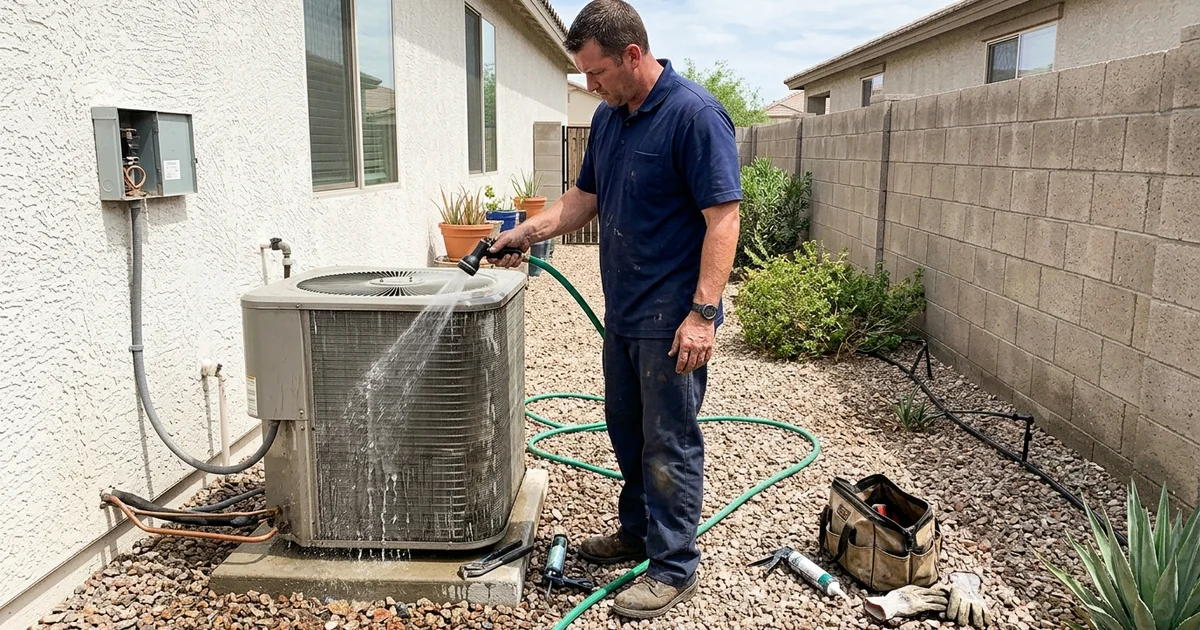
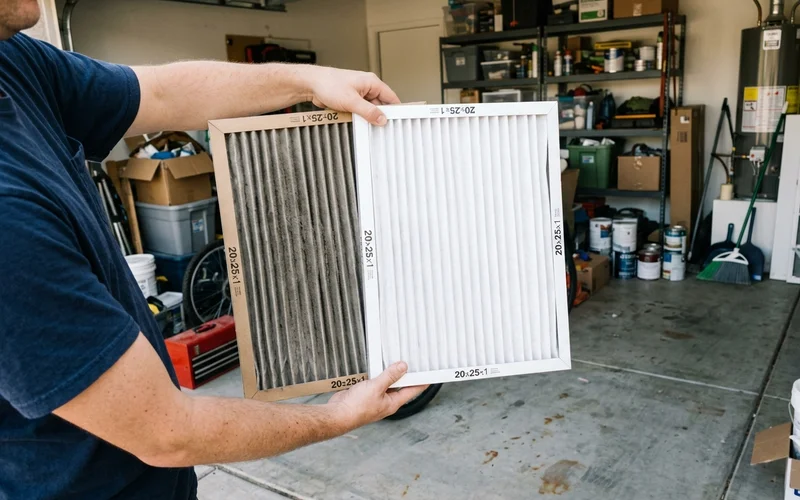
Then there is the dust. A haboob puts an extraordinary volume of coarse particulate into the air, and a filter that was fine last week is packed after one storm. Condenser coils load quickly in Queen Creek, San Tan Valley and Gold Canyon, where agricultural and open desert exposure runs well above the inner metro.
So the honest cadence here is twice yearly, not annually. AC maintenance and tune-ups at $27 per unit exists precisely so that this is never a difficult financial decision.
The spring visit is the one that matters
If you do one service a year, do it in March or April. That is the visit that finds the parts which would otherwise fail during a July heat wave.
The Schedule That Actually Fits
| When | What | Why then |
|---|---|---|
| March - April | Cooling tune-up | Finds marginal parts before the season that kills them |
| Monthly, Apr-Sep | Filter check | Dust load is far above what package labels assume |
| After any dust storm | Filter check, consider a coil rinse | A loaded coil costs measurable capacity immediately |
| October | Heating check | Furnaces here sit idle ten months and then get asked to run hard |
| Annually | Condenser coil wash | Cheapest capacity recovery available |
Outlying areas deserve tighter intervals. If you are in the agricultural corridor or against open desert, treat monthly filter checks as the baseline rather than the maximum.
What Skipping a Season Actually Costs
Three things, and they are cumulative rather than dramatic.
Capacity loss. A condenser coil fouled with two seasons of dust raises head pressure and reduces heat rejection. You lose real cooling in the week you need it most, and you pay for it at the meter continuously.
Component life. A capacitor at 70 percent of rating still works in April. Left in place, it makes the compressor struggle through thousands of hard starts before it finally fails, and every one of those is wear on the most expensive part of the system.
Warranty exposure. Most manufacturer warranties include a clause requiring documented annual maintenance by a qualified technician. Claims on expensive components do get questioned where there is no service history. That is a genuine financial exposure on equipment still inside a ten-year parts warranty, and it is entirely avoidable.
What the Visit Should Include
A tune-up that takes fifteen minutes is a filter swap with a sticker. A genuine one takes about an hour per system and produces measurements you keep: subcooling and superheat, static pressure across the air handler, capacitor tested under load, amp draw against nameplate, coil condition and condensate drain service.
What a tune-up includes walks through the full checklist and explains what each reading reveals.
The cadence itself is simple enough to remember: spring and fall, filters monthly through the hot months, and a coil wash after any serious dust event. Everything else follows from that.