
The Answer Most People Are Not Given
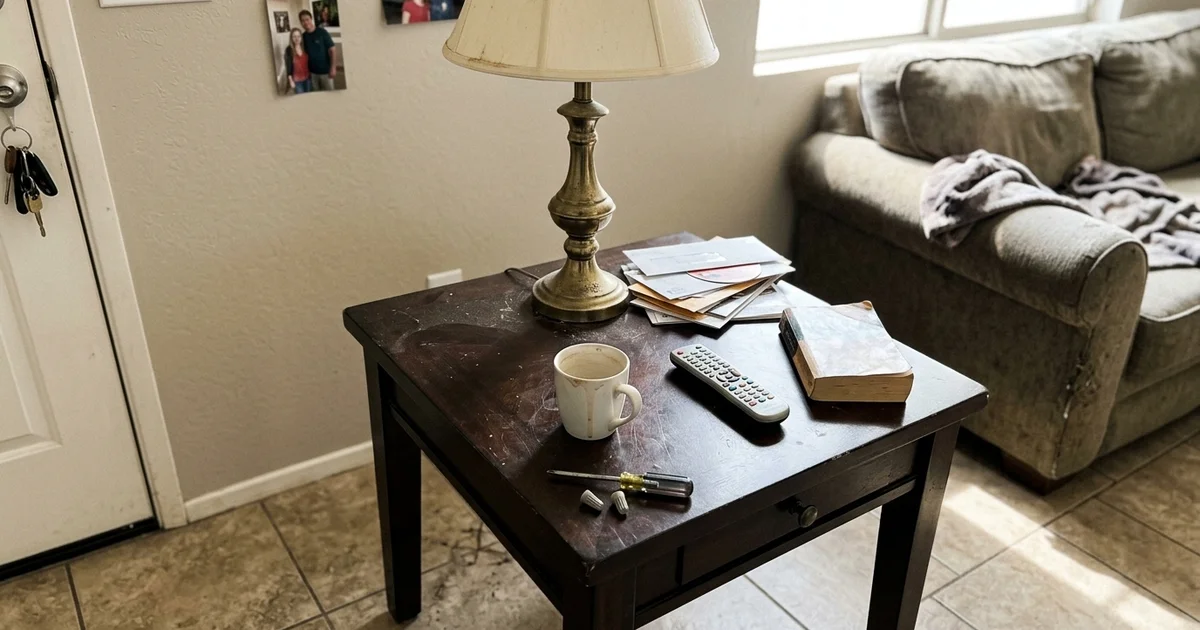
If your house generates dust faster than the household activity justifies, the most likely explanation is not your filter, your vacuum or your neighbourhood. It is that unfiltered attic air is entering your duct system continuously.
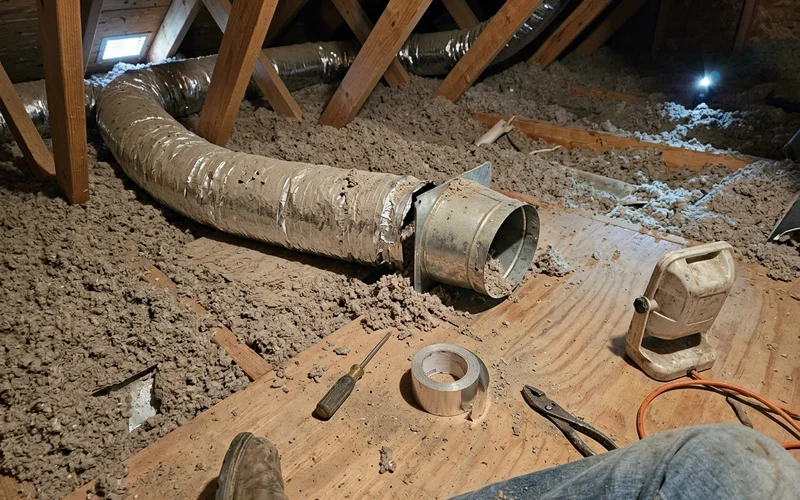
Here is the mechanism. Your return ductwork operates under negative pressure while the blower runs, meaning it is actively pulling air. Any gap, unsealed joint or loose boot connection in the return path pulls air from wherever it is, and in most Southwest homes that is a hot, dusty attic.
That air enters the system downstream of nothing and upstream of everything. It bypasses your filter entirely if the leak is on the return side past the filter, and every particle in it gets distributed through the supply registers into every room.
You can buy the best filter available and it will not touch this, because the air is not going through it. Duct cleaning and sealing is where the actual fix lives.
Why Desert Attics Make It Dramatically Worse
Two factors compound.
The attic is full of fine dust. Sonoran Desert particulate finds its way into every vented attic in the metro, and a haboob deposits a fresh load in hours. Blown insulation itself contributes fibres and dust.
The pressure difference is large. A hot attic at 140 degrees and a conditioned house at 78 create a substantial pressure and temperature gradient. The system pulls harder, and every gap moves more air.
So a leak that would be a minor nuisance in a mild climate with a clean attic becomes a continuous dust delivery mechanism here.
The tell: dust that reappears within days of cleaning
Household dust settles gradually. If surfaces are visibly dusty two or three days after cleaning, something is actively supplying it.
The Related Symptom: Uneven Rooms
Leaky ductwork and uneven room temperatures usually travel together, because both come from the same physical problems.
- A disconnected flex run. More common than people expect. Delivers your cooling to the attic instead of the bedroom, and produces a room that never gets cool.
- A crushed or kinked run. Restricted airflow to whatever it feeds.
- Supply leakage. Conditioned air lost before it reaches the register.
- Return path problems. Air can get into a room but not easily out, so it stops moving.
If you have a dusty house and one room that has always been warm, you almost certainly have one physical problem producing both.
What a Static Pressure Test Reveals
Static pressure is the resistance the duct system imposes on the blower, and it is the closest thing to a blood pressure reading for your HVAC system.
| Finding | What it usually means |
|---|---|
| High static pressure | Undersized ducts, restrictive filter, or blocked coil |
| Low static pressure with poor airflow at registers | Significant leakage, possibly a disconnected run |
| Normal pressure, uneven rooms | Balancing or branch sizing issue |
| Normal pressure, high dust | Return-side leakage past the filter |
Most homeowners have never had this measured, which means a system that has underperformed for years has never actually been diagnosed. It takes minutes and it is part of every tune-up we run.
Cleaning Versus Sealing
Duct cleaning is worthwhile after construction or renovation, after rodent activity, where there is visible biological growth, or where a system has run for years without adequate filtration.
Duct sealing is the fix when the problem is ongoing dust, uneven temperatures or high running costs. Mastic at the joints, boots and plenum connections, physical repair of any disconnected runs, and static pressure verified before and after.
Where we find a genuinely dusty duct system caused by a leaking return, the right sequence is seal first, then clean, so that what you clean stays clean.
Attic insulation and sealing covers the wider case for doing this work, including the fact that it frequently reduces the equipment size a future replacement needs. And if the dust problem persists after the ducts are sound, air filtration upgrades become genuinely useful rather than a workaround.