
MERV, in Plain Terms
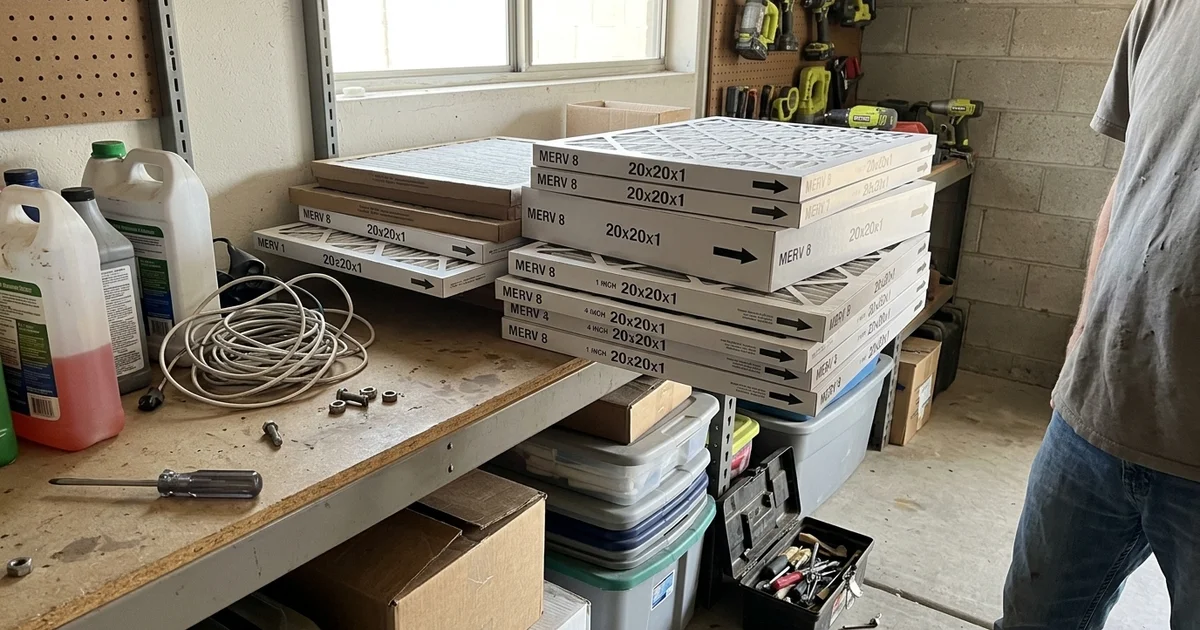
MERV stands for Minimum Efficiency Reporting Value, and it measures how effectively a filter captures particles across a range of sizes. Higher numbers capture more.
| MERV | Captures | Typical use |
|---|---|---|
| 1-4 | Large particles, lint, some dust | Protects equipment only, not air quality |
| 5-8 | Dust, pollen, mould spores | Common builder-grade filter |
| 11-13 | Fine dust, pet dander, most pollen, some smoke | The residential sweet spot |
| 14-16 | Very fine particulate, more smoke | Needs verified airflow capacity |
| HEPA | Extremely fine particulate | Requires dedicated equipment, not a filter slot |
The residential sweet spot is MERV 11 to 13, which captures the great majority of what people actually notice while remaining something a typical blower can pull air through.
Choosing the right rating requires knowing what your system can handle, which is what indoor air quality equipment selection starts with.
The Trade Nobody Explains at the Hardware Store
Capture and airflow resistance move together. A filter that catches more also resists more.
Every blower has a limit to the static pressure it can work against. Exceed it and:
- Airflow across the evaporator coil drops
- Cooling capacity falls
- The coil can freeze, which turns into a no-cooling call
- The blower motor runs hot and fails earlier
This is why the intuitive move, buying the densest one-inch filter available, frequently backfires. It is also why we measure static pressure before recommending anything and again after fitting it. Static pressure testing explains what the reading means.
The right answer to “I want better filtration” is usually deeper, not denser
A four or five inch media cabinet has several times the surface area of a one-inch filter. More area means the same air passes through more slowly, so a higher MERV is achievable at lower resistance, and the filter lasts months instead of weeks.
What HEPA Actually Is
HEPA is a defined performance standard, not a marketing term, and true HEPA filtration is far denser than any residential air handler can pull air through in a standard filter slot.
Genuine HEPA in a home requires either a dedicated bypass system with its own fan, or a portable room unit. Anything sold as a “HEPA-type” filter for a standard filter slot is not meeting the HEPA standard, whatever the box implies.
For most homes, a properly sized media cabinet at MERV 13 delivers the great majority of the practical benefit without the equipment complexity.
What UV-C Does and Does Not Do
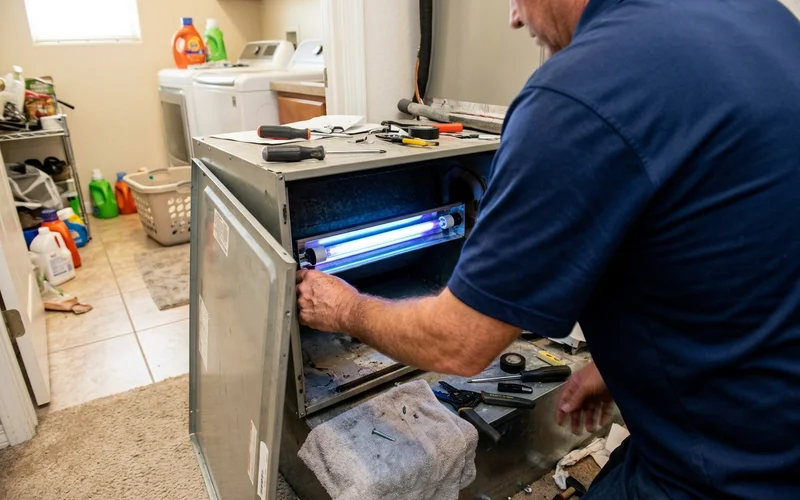
Does: kill biological growth on surfaces it directly illuminates. Positioned to shine on the evaporator coil and drain pan, it prevents the mould and bacterial film that develops on a permanently wet surface. That growth causes odour and reduces coil heat transfer, so removing it is genuinely worthwhile.
Does not: filter particulate of any kind. It will not help with dust, pollen, smoke or dander. Air passing through a duct spends a fraction of a second near the lamp, which is not meaningful exposure for airborne organisms.
We install UV-C where coil growth is the problem, which is more common in humid coastal California than in the desert, and we say plainly when it is not the right tool.
Matching Equipment to Your Actual Goal
| Your goal | What to buy |
|---|---|
| Less dust settling on surfaces | Media cabinet, plus sealing leaky returns |
| Allergy relief | MERV 13 media cabinet, continuous fan circulation |
| Wildfire smoke | High-capture media plus an active whole-home air cleaner |
| Musty smell when the AC starts | UV-C at the coil, plus drain pan service |
| Protecting the equipment | Any properly sized filter, changed on schedule |
| Post-dust-storm recovery | Filter change and a condenser coil rinse |
Two of those are not filtration problems at all. A dusty house is frequently a leaking return pulling attic air past your filter, and a musty smell is usually coil growth. Buying a better filter for either one is a reasonable-sounding purchase that does not address the cause.
Dust and smoke filtration covers the regional events specifically, and both of them start from the same place: measure the system first, then choose the equipment.