
The Comparison That Actually Matters
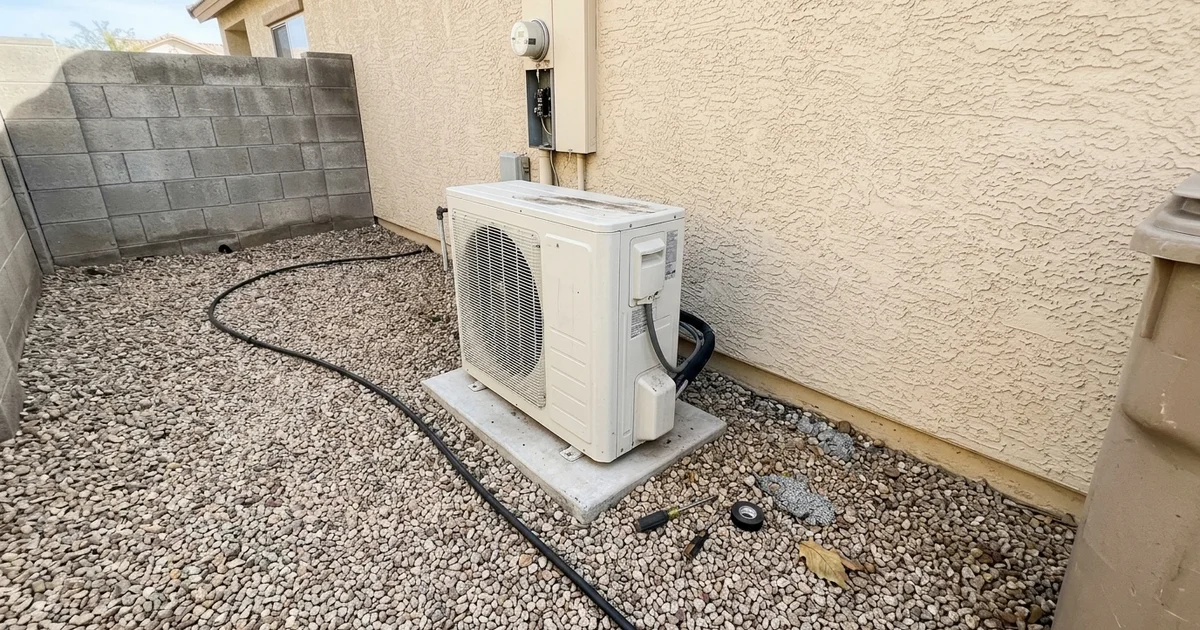
A gas furnace burns fuel to make heat. A heat pump moves heat that already exists from outside to inside, which is why it can deliver more energy as heat than it consumes as electricity. That difference in mechanism is why the two cannot be compared on efficiency ratings directly, since AFUE and HSPF2 measure different things on different scales.
The comparison that matters is cost per unit of delivered heat at your rates, plus the fact that a heat pump also provides your cooling, which means you are comparing one appliance against two.
Whichever way it lands, furnace and heat pump installation starts with the actual heating load for your address, because sizing determines behaviour far more than fuel choice does.
Where Each One Wins
| Factor | Heat pump | Gas furnace |
|---|---|---|
| Appliances needed | One, heating and cooling | Two, furnace plus AC |
| Performance in mild winters | Excellent | Excellent |
| Performance below freezing | Good on modern equipment, derates at extremes | Unaffected |
| Operating cost, Southern California | Usually lower | Usually higher |
| Operating cost, low-gas-rate Arizona territory | Competitive | Sometimes lower |
| California utility incentives | Strong | Limited |
| Regulatory direction | Favoured | Tightening |
| Venting requirements | None | Flue or PVC depending on tier |
| Equipment cost | Higher up front | Lower up front |
The reputation problem
Heat pumps carry a reputation for struggling in cold weather that dates from decades-old equipment in genuinely cold climates. Modern equipment holds usable capacity far lower than that reputation assumes, and nowhere in our service area except the high desert tests it.
The California Case
In our California service area the case for a heat pump is unusually strong, and it is not only about efficiency.
Heating hours are modest, so the regime where heat pumps are weakest barely occurs.
You need cooling anyway. A heat pump is a cooling system that also heats. Buying a furnace means buying a second appliance for a six-week job.
Title 24 Part 6 does not require a heat pump, but the code direction favours electrification and can add requirements to a gas replacement.
SCAQMD rules on gas appliances have been tightening over time, which is worth considering for equipment you will own for fifteen years.
The incentives are substantial. TECH Clean California plus individual utility programs from LADWP, SCE, Glendale Water and Power and Burbank Water and Power, and they lean heavily toward heat pumps. Heat pump rebates covers what stacks with what, and why the federal credit is no longer part of the math.
Removing a gas appliance also removes a combustion safety consideration from the house entirely, which some homeowners value on its own.
The Arizona Case
More balanced, and worth being honest about.
Gas is inexpensive in much of Arizona, and the heating season is short enough that operating cost differences are small in absolute terms either way. Meanwhile electric time-of-use rate structures in SRP and APS territory can make electricity expensive during exactly the hours you want heat.
Where a heat pump still makes sense in Arizona:
- You are replacing both the furnace and the AC anyway, so you are comparing one appliance against two
- Your gas service is limited, or you would need a gas line extension
- You value the simplicity of a single system
Where gas still wins:
- Your existing furnace is young and only the AC needs replacing
- You have very low electric-rate exposure and cheap gas
- Your heating load is genuinely trivial, making the up-front difference hard to recover
The High Desert Exception
Palmdale and the Antelope Valley are the one part of our coverage with genuine freeze cycles, and that changes the analysis.
At the coldest hours a heat pump’s output and efficiency both fall, and the system either leans on electric strip heat, which is expensive, or on a gas stage. That is the situation dual-fuel hybrid systems exist for: a heat pump handling the mild majority of hours and a gas furnace covering the hours below a calculated balance point.
Everywhere else in our service area, dual-fuel is a solution to a problem that does not occur often enough to pay for the second system.
How We Decide With You
We look at your actual heating load, your specific electric and gas rates including time-of-use structure, whether you are replacing one appliance or two, and what incentives your utility territory offers. Then we show you the operating cost comparison rather than asserting a conclusion.
Frequently the answer in California is a heat pump and the answer in Arizona depends on whether the AC is being replaced at the same time. But it is a calculation, not a policy.