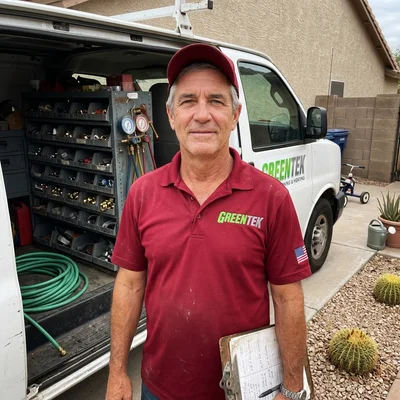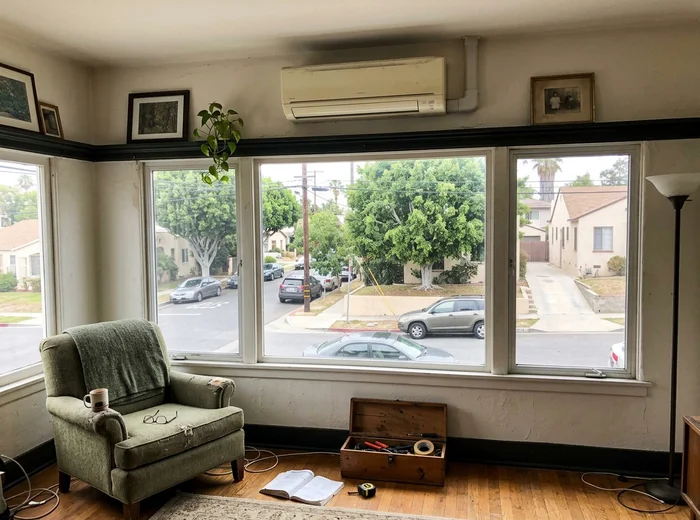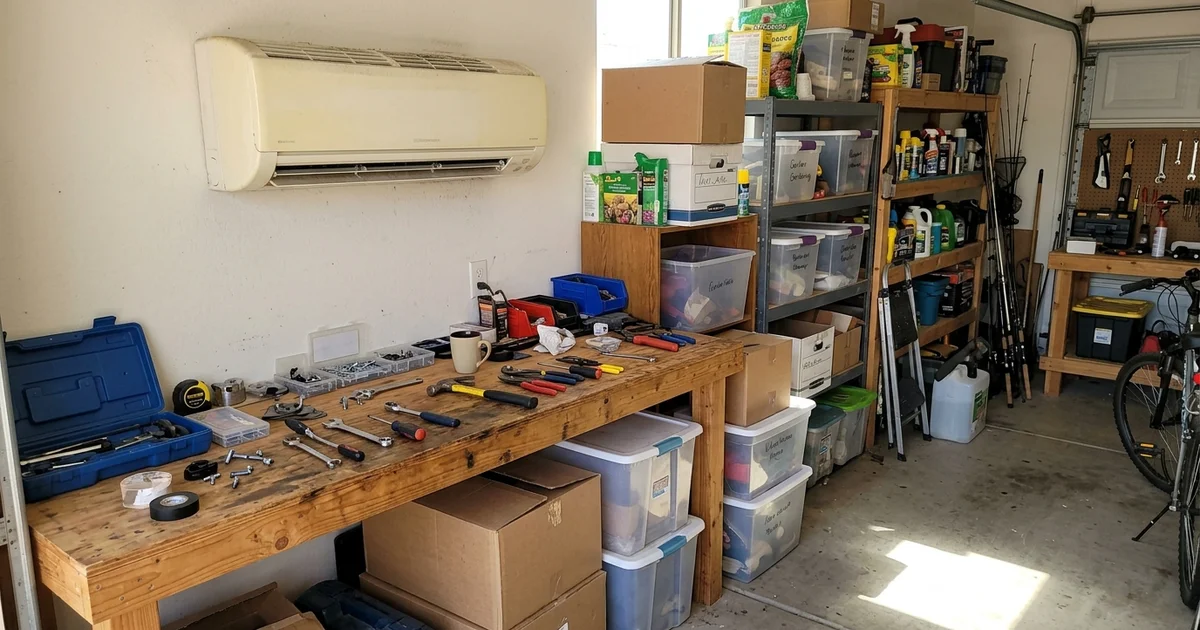

The homeowner had converted the back half of her detached Glendale garage into a 380-square-foot casita for her mother. The conversion had been done well - new framing, insulation, drywall, flooring, electrical, a mini-split line set roughed in by the electrician. What it did not have was the actual mini-split equipment, because the contractor who had been hired for the HVAC side had walked off the job over a sizing disagreement.
We came in, ran a Manual J, and confirmed what the original contractor had told her: a 9,000 BTU ductless was the correct size. We installed it. The casita hit setpoint on the first commissioning test.
What a Manual J Actually Looks Like for a Casita
The Manual J is the ACCA residential cooling load calculation procedure. It is the standard the industry is supposed to use to size residential cooling equipment. Most companies do not run one. They look at square footage, divide by a rule-of-thumb number, and put in whatever comes out of the tablet.
A real Manual J for this casita required the following inputs.
Floor area, ceiling height, and orientation. 380 square feet, 8-foot ceilings, with the long axis running east-west. The west-facing wall has a 6-foot by 8-foot sliding glass door and a 3-foot by 4-foot window. The east wall has one 3-foot by 4-foot window. The north and south walls are interior to the garage structure.
Construction details. R-13 batt insulation in the walls, R-30 blown cellulose in the attic above, single-pane glass on the west door and double-pane low-E on the east window. The shared wall to the original garage is uninsulated - the casita was framed against it but no insulation was added because the garage side is conditioned space.
Infiltration. The casita is on a slab, with a single exterior door, two operable windows, and the ductless line set passing through the wall in a sealed sleeve. We measured the air leakage at the door and window with a smoke pencil and used a conservative infiltration rate.
Internal gains. One occupant baseline, plus a television, a small refrigerator, and the lighting load. No cooking appliances in the casita.
Design temperature. Phoenix design temperature for cooling is around 108 degrees F at the 1 percent level, meaning the unit is sized to maintain indoor temperature on a day when the outdoor temperature exceeds 108 degrees for 1 percent of the design hour distribution.
Run those numbers through the Manual J and the total cooling load comes back at 8,400 BTU. With a 0.9 latent sensible heat ratio assumption and a 1.1 safety factor for the extreme cycling days in the Pacific Northwest - sorry, the desert - the right equipment size is a 9,000 BTU ductless.
Why the Original Contractor Was Right
The homeowner had been told by two different contractors that she needed a 12,000 or even 15,000 BTU ductless. Both were applying the rule of thumb (around 400 to 600 square feet per ton in a hot climate) and rounding up for the desert. A 12,000 BTU unit in a 380-square-foot casita would have been massively oversized.
An oversized ductless does not cool better. It does the opposite. It short cycles - it reaches setpoint so quickly that the compressor shuts off before it has run long enough to dehumidify the room. The result is a casita that hits setpoint but feels clammy. The homeowner runs the temperature lower to compensate, the unit short cycles more, and the comfort problem gets worse rather than better.
The original contractor had run the calculation, come up with 9,000 BTU, and told the homeowner that was the right answer. The homeowner had gotten two other opinions, both of which said the original was undersized. The contractor and the homeowner disagreed, the contractor walked, and the equipment never got installed.
What We Did Differently
We did the same calculation, came up with the same answer, and explained to the homeowner why a 9,000 BTU unit was the right call. We showed her the Manual J output. We pointed at the rule-of-thumb sizing the other contractors had used and explained why it was biased upward. We agreed to come back in July with a temperature and humidity gauge if she wanted verification that the 9,000 BTU was actually maintaining setpoint in extreme heat.
She signed. We installed the equipment.
The install. Condenser on a pad on the east side of the garage, away from direct afternoon sun, with 12 inches of clearance on all sides. Line set through the wall in a sealed sleeve with foam insulation. Air handler mounted high on the interior west wall, above the sliding glass door, where it can throw air across the room without being blocked by furniture.
The commissioning. We fired the unit, set it to 72 degrees, and let it run for an hour. Room temperature stabilized at 71 degrees with the outdoor temperature at 106. We pulled the humidity reading at the return - 47 percent relative humidity, which is in the comfort range for cooling. No short cycling, no clammy air, no temperature swing.
The casita has been in service for two summers now. We have been back once, for the annual cleaning and filter service. The 9,000 BTU unit has held up to Phoenix summers exactly the way the Manual J predicted.
What the Right-Sized Install Cost
| Line item | What it covered |
|---|---|
| Manual J load calculation | Full room-by-room input and output |
| 9,000 BTU ductless | Single-zone, high-efficiency inverter |
| Condenser pad and electrical | New pad, dedicated circuit from main panel |
| Line set and insulation | New copper line set, foam insulation, sealed wall sleeve |
| Air handler mounting | High on west wall, condensate routed to exterior |
| Commissioning | Vacuum test, refrigerant charge, run test |
Total: $3,200 installed. A 12,000 BTU unit would have been about $200 more for the equipment and the same install cost. The savings on the equipment would have been wiped out by the comfort problems the oversized unit would have caused.
What We Tell Homeowners Considering Ductless
Three things to verify before signing a ductless quote.
The contractor should have run a Manual J. Not a rule of thumb, not a square-footage calculation - a Manual J with the actual inputs from your space. If the contractor cannot show you the calculation, the sizing is a guess.
The unit should not be larger than what the calculation returned. Oversizing is the single most common ductless install mistake, and it produces a comfort problem that does not show up until the first hot week. A unit that is 20 to 30 percent oversized will short cycle and feel clammy. A unit that is 50 percent oversized will do that and never quite reach stable temperature.
The line set should be sealed and insulated. A line set passing through a wall is a path for air leakage and a path for thermal loss. Sealed sleeves and foam insulation around the line set are not optional. The wall penetration should not leak air with a smoke pencil test on commissioning.
The ductless category is a genuine upgrade over window units and a sensible solution for casitas, conversions, and additions. The equipment only delivers on that promise when it is sized correctly and installed to the manufacturer’s specs.
If you are considering a ductless install for a casita, conversion or addition - request a Manual J sizing assessment or read more about ductless sizing and installation.