
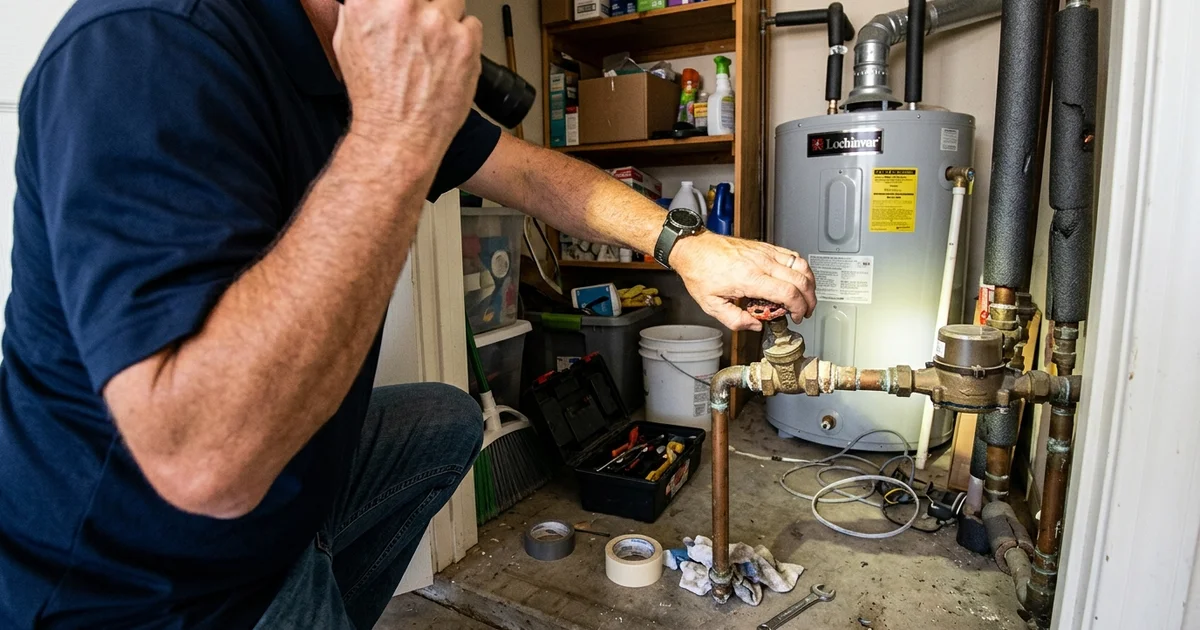
Do These Four Things First
If water is actively escaping right now, stop reading after this section and act.
1. Close the main water shutoff. Everything else is secondary. In most Arizona homes the valve is on an exterior wall near the front hose bib or in a meter box at the street under a metal lid. In older California homes, look in a basement, a crawlspace access, a garage wall or at the street meter. Turn clockwise to close, or a quarter turn on a lever-style ball valve.
2. Kill power to affected areas. If water is anywhere near outlets, light fixtures or an electrical panel, turn off the breakers for those circuits before walking through it. If water is near the panel itself, do not touch it, stay out and call the utility.
3. Turn off the water heater. Gas control to off or pilot, or its breaker off on an electric unit. A heater firing on a tank that is not being resupplied is a genuine hazard.
4. Call. Emergency plumbing dispatch is same-day, and we will talk you through anything above that you are unsure about while a truck is already moving.
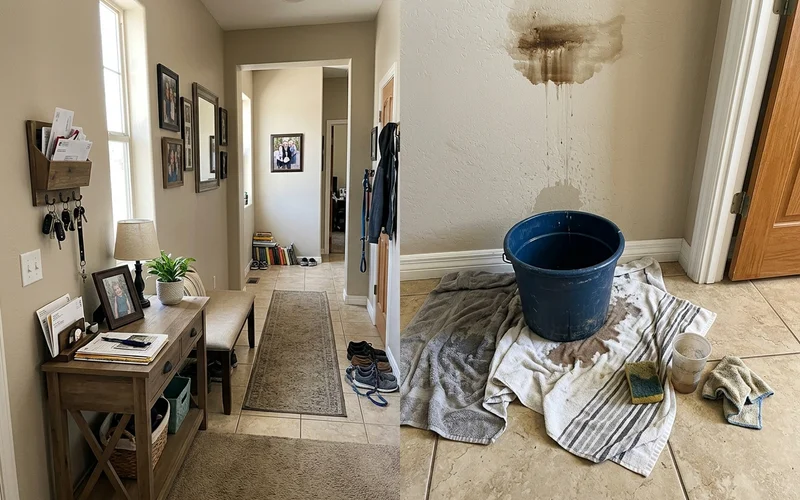
Photograph before you clean up
Insurance commonly covers resulting water damage even where the failed pipe itself is excluded, and the outcome depends heavily on documentation. The pictures you take before the cleanup starts are the ones an adjuster will care about most.
Then Contain and Document
Once the water is off, you have time to limit the damage.
Move what you can. Furniture off wet flooring, rugs up, anything on the floor in adjacent rooms raised. Water travels further than you expect through flooring and under baseboards.
Contain active dripping. Buckets and towels under any ceiling drip. If a ceiling is bulging with trapped water, a controlled small puncture over a bucket is better than the whole section letting go at once, but only do that if you are confident there is no electrical fixture in that area.
Start air moving. Fans and open windows if the outdoor conditions allow. In summer heat that may mean running the air conditioning instead, which dehumidifies.
Document thoroughly. Photographs of the source, the standing water, every affected room and every damaged item, plus a short video walkthrough. Note the time you discovered it.
Notify your insurer. Early, not after the repair is finished.
Where the Shutoff Usually Is
| Home type | Common shutoff location |
|---|---|
| Arizona slab-on-grade | Exterior wall near front hose bib, or street meter box |
| Arizona newer build | Exterior wall, often near the garage |
| Older California, pre-1960 | Basement, crawlspace access, or garage wall |
| California with street meter | Meter box at the kerb, needs a meter key |
| Any home with a water softener | Sometimes a dedicated valve in the loop |
It is worth finding yours on a calm day and confirming it actually turns. Valves that have not moved in twenty years sometimes will not, and discovering that during an emergency is a bad moment.
What a Pinhole Leak Is Telling You
A burst pipe is an event. A pinhole leak is a symptom, and the distinction matters for what you do next.
Pinhole leaks develop where water chemistry has been working on the inside of copper pipe for years. When one appears, the rest of the system is the same age, the same material, and has seen exactly the same water. Which is why homeowners with one pinhole leak frequently get another somewhere else within months.
One pinhole is a repair. A pattern of them, particularly combined with declining pressure or discoloured water on first draw, is the point at which whole-home repiping in PEX-A or Type L copper starts to cost less than the treadmill of individual repairs.
If instead the water is appearing from the floor rather than a wall or ceiling, slab leak signs covers that pattern, which behaves differently and is located differently.
For what any of this costs, emergency plumbing cost has the ranges, and our flat rate does not change because it is a Saturday.